MEDIA RELEASE: US attacks on nuclear sites are a dangerous escalation — Australia must not assist

CAMPAIGN NEWS:

MEDIA RELEASE: US attacks on nuclear sites are a dangerous escalation — Australia must not assist

MEDIA RELEASE: US attacks on nuclear sites are a dangerous escalation — Australia must not assist

The International Campaign to Abolish Nuclear Weapons (ICAN) Australia condemns the United States’ reported strikes on three nuclear facilities in Iran. This reckless action brings the world closer to nuclear disaster and underscores the urgent need to reject nuclear weapons and the cover they provide for military aggression.

Nuclear facilities, whether civilian or military, must never be targeted. Such attacks not only violate international humanitarian law but also risk severe radiological consequences for people and the environment—within Iran and far beyond its borders.

Iran is a party to the Nuclear Non-Proliferation Treaty (NPT) and there is no evidence from the International Atomic Energy Agency or other authorities that Iran has developed nuclear weapons. Iran was also in full compliance with an agreement severely constraining its nuclear activities until the US walked away from the deal. Yet it has been hypocritically attacked by two nuclear-armed states: Israel—which has never signed the NPT and is widely understood to possess 90 nuclear weapons—and the United States, which possesses approximately 3,700 nuclear warheads. The United States is violating its disarmament obligations, as are the other eight nuclear-armed states. Such attacks risk pushing more states to pursue nuclear weapons.

“A military strike on nuclear facilities greatly elevates global risk and should be condemned by Prime Minister Albanese and Foreign Minister Wong” said Dr Margaret Beavis OAM, ICAN Australia Co-chair. “This escalation shows how quickly so-called ‘deterrence’ gives way to dangerous, destabilising force. We are playing with radioactive fire.”

“We call on the Australian Government to immediately rule out any logistical support for these operations, including by denying permission for US B-2 stealth or B-52 bombers attacking Iran to transit or refuel in Australia, as occurred recently during a US mission to attack Yemen,” said Gem Romuld, Director of ICAN Australia. “Australia must not facilitate, assist or enable these attacks — directly or indirectly.” 

If nuclear weapons were to be used in this conflict—whether by Israel   or the United States—the humanitarian consequences would be immediate and devastating. Even a single nuclear detonation over a city would kill hundreds of thousands of people instantly, overwhelm all medical systems, and contaminate the environment for decades. A regional nuclear conflict would cause a nuclear winter, massively disrupt global food production, drive famine and mass displacement, and risk further escalation. The Bulletin of the Atomic Scientists warns that we are closer to nuclear war than at any time since the Cold War—and recent events show just how quickly that risk can materialise.

“This is the terrifying reality of a world that continues to tolerate the possession of nuclear weapons by any state. The only path to safety is disarmament. Australia must urgently sign and ratify the Treaty on the Prohibition of Nuclear Weapons and stand against all acts of nuclear aggression” said Romuld. 

BACK TO NEWS

Media Release: Israel-Iran conflict shows the deadly danger of nuclear brinkmanship — Australia must reject nuclear weapons

CAMPAIGN NEWS:

Media Release: Israel-Iran conflict shows the deadly danger of nuclear brinkmanship — Australia must reject nuclear weapons

MEDIA RELEASE: Israel-Iran conflict shows the deadly danger of nuclear brinkmanship — Australia must reject nuclear weapons

The International Campaign to Abolish Nuclear Weapons (ICAN) Australia warns that the escalating conflict between Israel and Iran is a terrifying reminder of how close the world remains to nuclear disaster — and calls on the Australian Government to condemn illegal military attacks, reject nuclear deterrence, and join the UN Treaty on the Prohibition of Nuclear Weapons (TPNW).

On 13 June, Israel launched strikes on Iranian nuclear facilities. This illegal attack has provoked a military response and escalation on both sides threatens to further unravel the already fragile nuclear non-proliferation framework. The use of force against nuclear facilities violates international law and risks radioactive contamination with long-term consequences for human health and the environment.

“The prospect of radiation release, the erosion of non-proliferation norms, and the emboldening of nuclear-armed states to act without accountability — this is the deadly logic of nuclear deterrence playing out in real time,” said Gem Romuld, Director of ICAN Australia. “We need urgent de-escalation and a return to diplomacy. Australia should press its allies, particularly the United States, to act responsibly and stop enabling this cycle of violence.”

Israel, the only nuclear-armed state in the Middle East, is widely believed to be modernising its arsenal. In 2024, it conducted a missile propulsion test potentially linked to its Jericho nuclear-capable ballistic missiles, and appears to be upgrading its Dimona plutonium production nuclear site. Israel remains outside the Nuclear Non-Proliferation Treaty (NPT), and its nuclear weapons are a major source of instability in the Middle East. Iran, among the first to propose a nuclear weapons-free zone in the Middle East, is a state party to the NPT but has now threatened to withdraw.

“Because it is nuclear-armed Israel acts with impunity — and because it is provided with funding, intelligence, weapons and support, including by the recent G7 statement expressing support for Israel’s ‘security’, its violations go unchecked,” said Assoc. Prof. Tilman Ruff AO, founding chair of ICAN Australia. “This sets a dangerous precedent. Israel’s aggression, its timing and murder of the lead Iranian negotiator suggests it wanted to kill diplomacy. All countries should condemn Israel’s illegal and hypocritical attack and call for an end to hostilities before the world faces even more catastrophic escalation.”

ICAN Australia stresses that treaties like the NPT and the TPNW are vital for global and regional peace. While the NPT is under enormous strain, the TPNW offers a new and necessary pathway toward delegitimisation of nuclear weapons and disarmament. Every state has a role to play in universalising these treaties and reinforcing international law.

Meanwhile, the nuclear threat is growing globally. According to newly released figures from the Stockholm International Peace Research Institute (SIPRI), all nine nuclear-armed states — including the US, Russia, China, and Israel — continued to expand and modernise their arsenals in 2024. Of the estimated 12,241 nuclear warheads globally, 9,614 remain in military stockpiles, and 3,912 are deployed on missiles and aircraft, with 2,100 kept on high operational alert.

Australia’s policy of relying on US nuclear weapons — so-called “extended nuclear deterrence” — ties us to these risks. It undermines our credibility as a proponent of disarmament and international law and makes us complicit in the threat of mass destruction.

“This is a global emergency,” said Romuld. “We need leadership — not loyalty to an existential threat. Australia should lead by example, reject nuclear weapons, and join the TPNW.”

In 2024, nuclear-armed states spent over US$100 billion on their arsenals — an 11% increase from the previous year. According to ICAN’s new report Hidden Costs: Nuclear Weapons Spending in 2024, private weapons contractors earned at least US$42.5 billion from nuclear weapons activities. Every dollar invested in weapons of mass destruction is a dollar stolen from climate action, health care, and public safety.

“Eighty years after Hiroshima and Nagasaki, this is the reality: rising spending, rising risks, and no accountability,” said Romuld. “Australia must help shift the tide. Now is the time to take a stand.”

ICAN Australia urges the Albanese Government to:

  • Condemn Israel’s illegal strike and call for an immediate end to hostilities.
  • Oppose any threat or use of nuclear weapons under any circumstances.
  • Implement Labor’s national policy commitment to sign, then ratify the TPNW without delay.

“We must not be complicit partners in a system that normalises nuclear threats,” said Ruff. “Australia has a choice: double down on being part of the problem and the nuclear status quo — or help build a safer, disarmed world.”

BACK TO NEWS

Media Release: Trump is putting nuclear disarmament on the agenda, Australia must join the ban

CAMPAIGN NEWS:

Media Release: Trump is putting nuclear disarmament on the agenda, Australia must join the ban

MEDIA RELEASE

Trump is putting nuclear disarmament on the agenda, Australia must join the ban.

Last week, US President Donald Trump proposed to cut the US defence budget by half and to stop producing new nuclear weapons. “We already have so many,” he said, “you could destroy the world 50 times over, 100 times over.”

In response to Trump’s statements, the International Campaign to Abolish Nuclear Weapons (Australia) Director, Gem Romuld, said: 

“Trump’s statements to stop spending money on nuclear weapons are a welcome development, and we hope will lead to action to reduce stockpiles. They should strengthen Australia’s resolve to sign and ratify the Treaty on the Prohibition of Nuclear Weapons (TPNW), as Labor has promised to do in government, and to cease the policy of “extended nuclear deterrence” (END) once and for all. 

“Relying on END signals support for the use of nuclear weapons, which would wreak a humanitarian catastrophe on hundreds of thousands—if not millions—of people.

“We welcome any efforts on nuclear disarmament, but if President Trump is serious then he should join the TPNW and encourage other nuclear-armed states to do so as well.”

The US spends half of its disposable (what’s left after entitlement and interest payments) federal budget on defence, and in 2023 more than $50 billion was spent on nuclear weapons alone. Russia and the US possess 90% of all nuclear weapons globally, with Russia possessing 5580 warheads and the US possessing 5044. Modern nuclear weapons have many times the explosive yield of the bomb dropped on Hiroshima. The smoke from burning cities ignited by a nuclear war, involving just 2% of the global nuclear arsenal, would plummet global temperatures, decimate agriculture, disrupt ocean food chains, and condemn over two billion people to starve to death.

The United Nations Treaty on the Prohibition of Nuclear Weapons, provides a pathway under international law for nuclear armed states to disarm in a time bound verifiable manner. Since it entered force in 2021, the TPNW has been signed or ratified by half of all the world’s countries, including most of Australia’s neighbours in South-East Asia and the Pacific. 

From 3 – 7 March 2025, the Third Meeting of States Parties to the TPNW will be held at the United Nations headquarters in New York. An ICAN delegation will be present, including Yankunytjatjara-Anangu woman and second-generation nuclear test survivor, Karina Lester, and ICAN Campaigner, Jemila Rushton.

BACK TO NEWS

It’s 89 seconds to midnight

CAMPAIGN NEWS:

It’s 89 seconds to midnight

MEDIA RELEASE

It’s 89 to midnight: Doomsday Clock announcement signifies nuclear threat is greater than ever


This morning (10am EST Tuesday January 28), The Bulletin of Atomic Scientists reset the Doomsday Clock to 89 seconds to midnight, surpassing its previous setting of 90 seconds to midnight. The new time indicates we are now at the most dangerous moment in history since the Doomsday Clock was launched in 1947—two years after the devastating atomic bombings of Hiroshima and Nagasaki.  

Today’s new setting of the global Doomsday Clock highlights the need for urgent action to reduce the growing threat of the accidental or deliberate use of nuclear weapons. 

The Doomsday Clock, a symbolic representation of our proximity to annihilation (midnight), is one of the most authoritative annual assessments of how humanity is tracking on the biggest issues: the existential threats posed by nuclear weapons and global heating. Each year in January, it is set by the science and security board of the Bulletin of Atomic Scientists – scientists and other experts with deep knowledge of nuclear technology and climate science.

The Bulletin of the Atomic Scientists attribute their decision to move the clock forward largely because of the proliferation of nuclear weapons and threats to use them, disruptive technologies like artificial intelligence, the Russian-Ukraine war, conflict in the Middle East, biological/pandemic threats and the escalating climate crisis.

With President Trump taking office in the US, he gains the ultimate authority over America’s nuclear arsenal and regains control of the nuclear “football,” launch codes, and authorizations—in other words he gains the power to commit mass murder and devastate our planet.

In response to the new time, Tilman Ruff AO, Associate Professor in the Nossal Institute for Global Health in the School of Population and Global Health, University of Melbourne and co-founder of the International Campaign to Abolish Nuclear Weapons (Australia), said: 

“Nuclear-armed states building nuclear weapons and delivery systems designed to last till the end of this century belies their obligation to negotiate a world freed from nuclear weapons. The only thing the figleaf of nuclear deterrence is reliably deterring is nuclear disarmament.

“We are “teetering near the edge” of unprecedented danger, but must not lose hope. We need action by governments and people that comes much closer to matching the immensity and urgency of the danger. Our best hope lies in the 2017 Treaty for the Prohibition of Nuclear Weapons (TPNW), now joined by very nearly half of the world’s nations, with a combined population of 2.5 billion.”

“The TPNW for the first time makes the worst weapon of mass destruction illegal in international law. It has changed nuclear debates and is stigmatising nuclear weapons and threats. It has already stimulated financial institutions managing over four trillion US dollars in funds to divest from companies profiting from building nuclear weapons. It is bringing to life long-overdue assistance for the victims of nuclear weapons use. And it provides the only internationally agreed framework for verifiably and irreversibly eliminating nuclear weapons. As Labor has committed to do, joining this treaty is the best immediate step responsible nations can take to wind back the Doomsday Clock.”


BACK TO NEWS

MEDIA RELEASE: Indonesia and Solomon Islands ratify nuclear weapon ban treaty.

MEDIA RELEASE: Indonesia and Solomon Islands ratify nuclear weapon ban treaty.

Indonesia and the Solomon Islands are among the newest state parties to the UN Treaty on the Prohibition of Nuclear Weapons (TPNW), making Australia increasingly an outlier within the Asia-Pacific region.

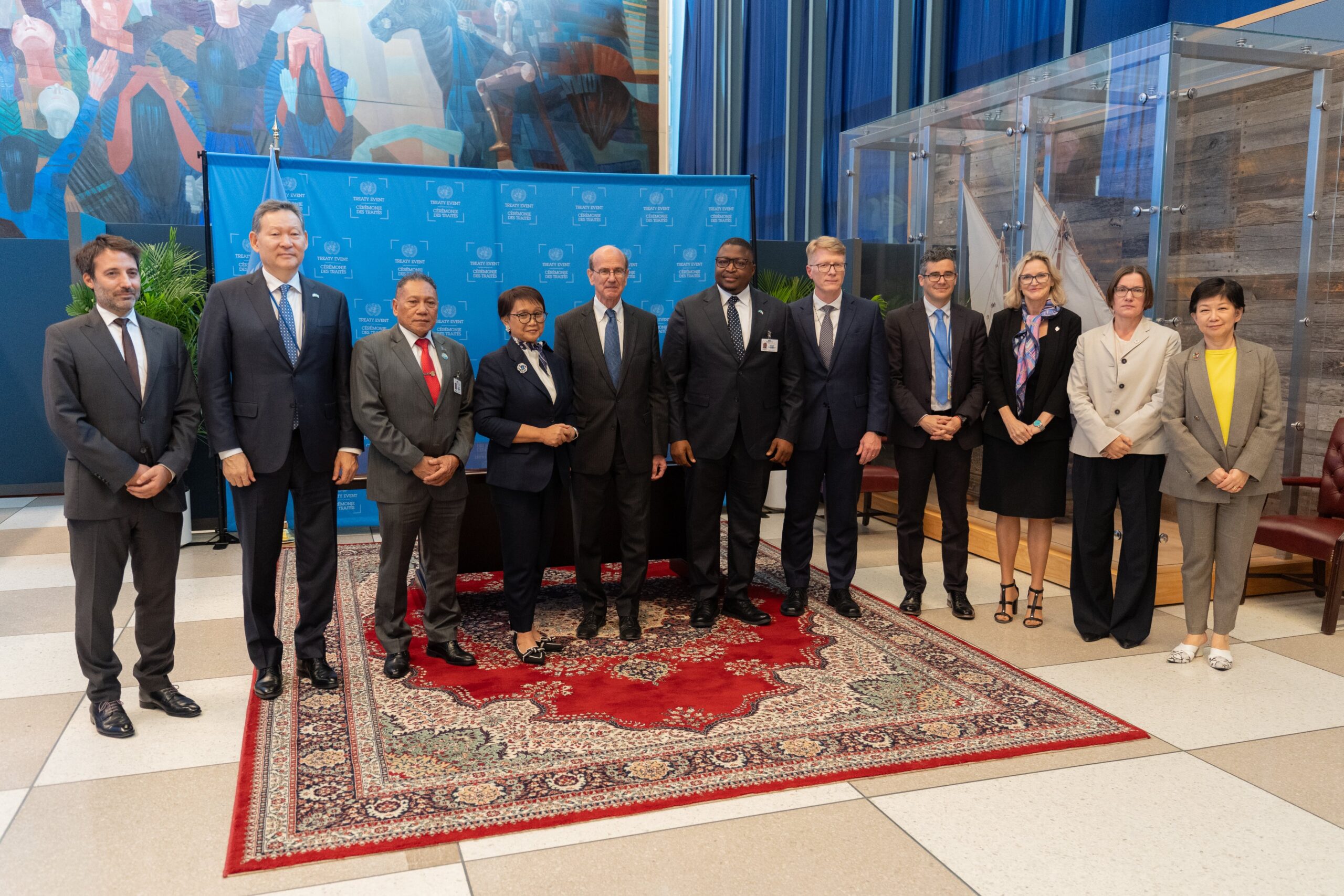
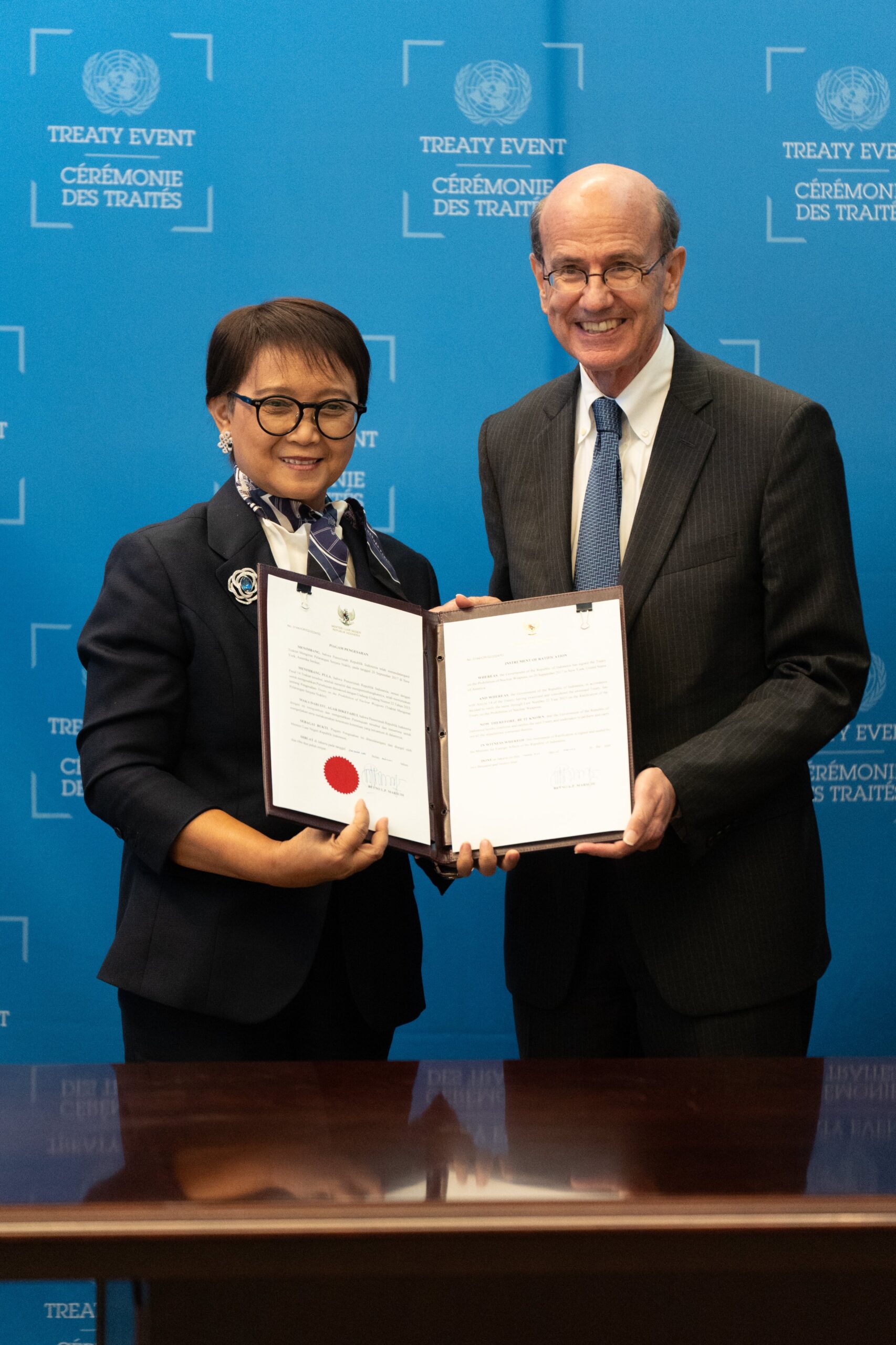
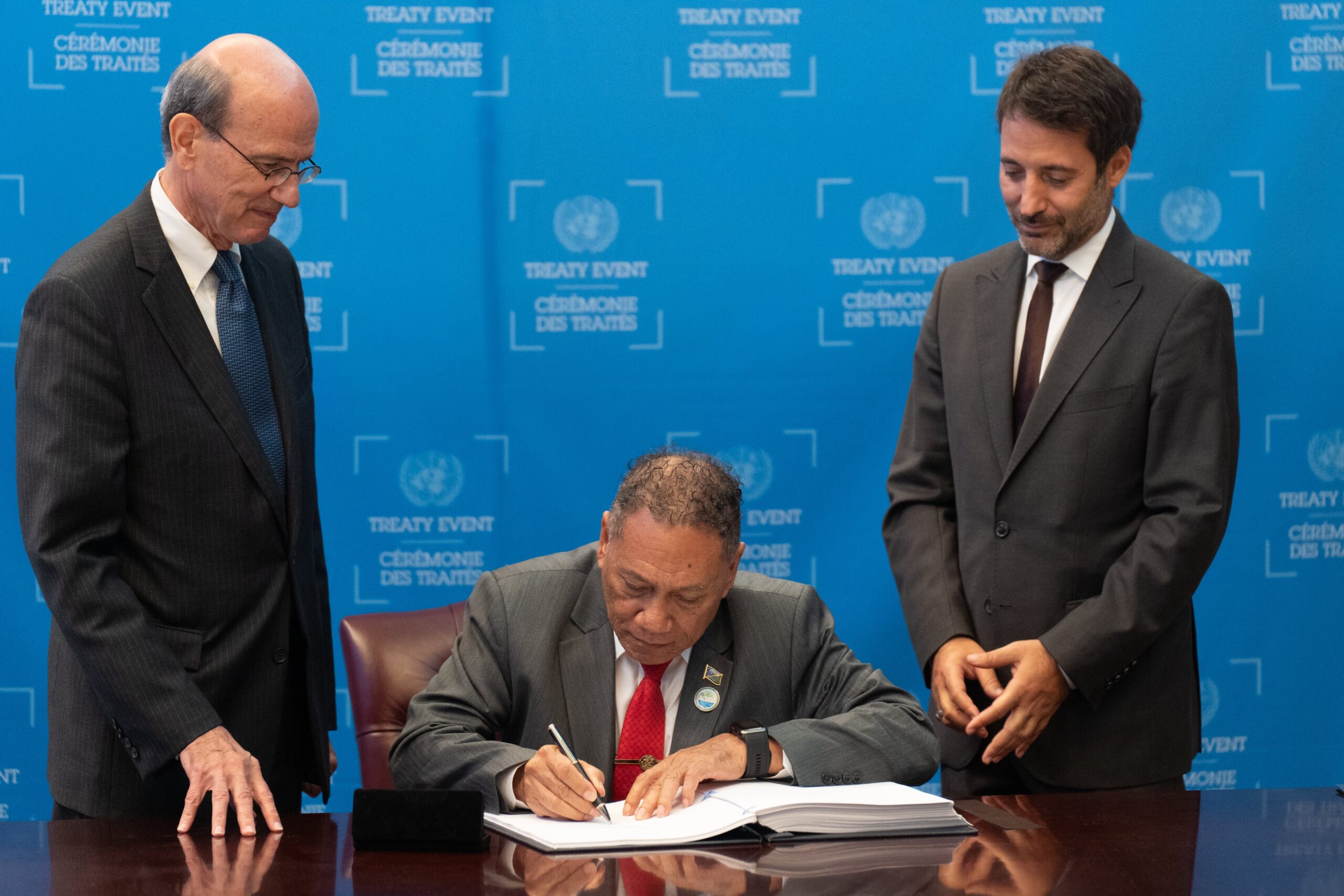
The Indonesian foreign minister, Retno Marsudi, and Solomon Islands minister of foreign affairs and external trade, Peter Shanel Agovaka, deposited their country’s instruments of ratification at a high-level ceremony at the United Nations headquarters in New York on Tuesday (Wednesday morning in Australia), bringing the total number of states parties to 73. A further 25 states have signed but not yet ratified the treaty. 

Indonesia is the largest country by population to have ratified the landmark UN agreement to date. Australia shares a close economic, diplomatic and defence relationship with the Muslim-majority nation, which is one of Australia’s closest neighbours in the Asia-Pacific region. Last month, the Australian defence minister, Richard Marles, announced that Australia and Indonesia had strengthened security ties with the signing of the Australia‑Indonesia Defence Cooperation Agreement.

According to the Indonesian government, its decision to ratify the TPNW aligned with its constitutional mandate to promote peace and security, and sent a clear message to the world that “the possession and use of nuclear weapons cannot be justified for any reason”.

The Solomon Islands and Australia also have a strong and long standing relationship. Australia is an important economic partner to the Solomon Islands, as well as their largest development partner. The Solomon Islands is the 11th Pacific island state to ratify or accede to the TPNW. It signed the treaty at the same time as ratifying it.

Sierra Leone also ratified the TPNW at the same time. 

Australia has not yet signed or ratified the TPNW, although Labor has said that it “is considering the TPNW systematically and methodically as part of [their] ambitious agenda to advance nuclear non-proliferation and disarmament”. Prior to becoming prime minister, Anthony Albanese voiced strong support for the treaty.

Jemila Rushton, Acting Director of ICAN Australia said:

“Today’s ratifications reaffirm that nuclear weapons have no place in our region, or in our defence policies, and should make Australians ask why our government remains at odds with the vast majority of our neighbours. It is time for Australia to demonstrate it is serious about regional peace and security, and for Labor to make good on its promise to sign and ratify the TPNW in government.”

Dr Muhadi Sugiono, ICAN campaigner in Indonesia and lecturer at Universitas Gadjah Mada, said:

“By ratifying the TPNW, Indonesia is asserting its right to exist in peace, free from the shadow of nuclear threats. It’s sending a strong message to other states, especially in the Asia-Pacific region, that nuclear weapons are totally unacceptable and illegal. It’s a principled position, based on respect for international law and a recognition of the catastrophic harm that nuclear weapons inflict across national boundaries. And it’s consistent with Indonesia’s long record of advocacy for nuclear disarmament as a leading member of the Non-Aligned Movement.”

Maverick Peter Seda from the Malaita Provincial Youth Council, an ICAN partner organisation in the Solomon Islands, said:

“This is amazing news for all the young people in the Solomon Islands who have worked tirelessly to promote this outcome. We are committed to the goal of a nuclear-free Pacific and world.”

The International Campaign to Abolish Nuclear Weapons (ICAN) congratulates Indonesia, Solomon Islands, and Sierra Leone on ratifying the nuclear ban treaty – the first comprehensive, globally applicable prohibition on nuclear weapons. The TPNW establishes a framework for eliminating existing stockpiles of nuclear weapons and addressing the harm caused by their use and testing. It was negotiated in 2017 and entered into force in 2021. 

Relevant links:

Photos credit: Derek French / ICAN.

BACK TO NEWS

Media Release: Australian Lawyers call on PM to sign nuclear weapon ban treaty

Media Release: Australian Lawyers call on PM to sign nuclear weapon ban treaty

MEDIA RELEASE: Australian Lawyers call on PM to sign nuclear weapon ban treaty

Today, on the 79th anniversary of the US atomic bombings of the Japanese city of Nagasaki, a group of Australian lawyers have called on Prime Minister Anthony Albanese to sign the Treaty on the Prohibition of Nuclear Weapons (TPNW) “without further delay.”

In an open letter signed by thirty-five lawyers and international law academics, Lawyers for Peace stated that “With two nuclear-armed powers involved in heated conflicts overseas, and the risk of nuclear escalation growing, now is a vital time to take necessary steps for nuclear disarmament.”

They write, “We believe that international law can play a powerful role in nuclear disarmament and the creation of new norms, leading to increased peace and security for all.”

The letter—whose signatories include Robert Tickner AO, Former Australian Minister and Humanitarian Campaigner, Katie Robertson, Human Rights Lawyer and Director of Stateless Legal Clinic, and Corinne Grant, Human Rights Lawyer, Comedian, and Television Presenter, among others—highlights the complementarity between the Treaty on the Non-Proliferation of Nuclear Weapons (NPT) and the TPNW, stating that together they create a “robust legal framework for a nuclear-free world.”

“The TPNW enhances the NPT through a comprehensive prohibition on nuclear weapons that applies to all parties. It also establishes frameworks for the verified, time-bound elimination of nuclear-weapon programmes and for addressing harms caused by nuclear weapons.”

Rachel Croucher, a member of Lawyers for Peace and a co-author of the letter, stated, “I joined Lawyers for Peace because of my vision for a safer and fairer world for all.”

“I believe that our government signing the Treaty on the Prohibition of Nuclear Weapons is a crucial step in achieving this vision.”

“This treaty is not just a symbolic gesture but a tangible step towards global disarmament. By acting now, Australia can demonstrate its commitment to international peace and security and set a powerful example for other nations.”

BACK TO NEWS