Australia has voted to be nuclear-free

CAMPAIGN NEWS:

Australia has voted to be nuclear-free

At Saturday’s federal election, the Australian public clearly rejected nuclear energy, giving the new Anthony Albanese Labor Government a mandate for bold leadership on issues that truly matter. Banning nuclear weapons is one of them.

In rejecting the Opposition’s nuclear energy proposal, a key part of their election platform,  Australians have rejected the risks, costs and burden of nuclear power. If Australians don’t want nuclear power, then they certainly don’t want any involvement in nuclear weapons. Independent polling verifies this, showing three in four Australians agree that Australia should “end any support for nuclear weapons and sign and ratify” the Treaty on the Prohibition of Nuclear Weapons (TPNW). 

Anthony Albanese introduced the 2018 motion committing Labor to sign and ratify the TPNW. This policy has now been reaffirmed twice, in 2021 and 2023.

Nuclear weapons are the most destructive, inhumane and indiscriminate weapons ever created. Today, we have an opportunity to take a step towards their elimination. (Anthony Albanese, December 2018)

In Albanese’s first term as Prime Minister, Australia ended its opposition to the Treaty on the Prohibition of Nuclear Weapons and began to engage with it. Now, Prime Minister Albanese has been given a mandate to sign and ratify. 

There is nothing stable or secure about the geopolitical landscape. Nine nuclear-armed countries have the ability to begin a nuclear war, or to launch a nuclear weapon by accident. This is not the time to wait and see, nor to follow President Trump into nuclear catastrophe.

This August is 80 years since the nuclear destruction of Hiroshima and Nagasaki. Every person under the age of 80 has not lived a day without the nuclear threat hanging over our heads.

Eliminating nuclear weapons is a difficult, but essential task. Australia can be a global leader by demonstrating strength through diplomacy and international law.

The most effective step Australia can take on nuclear weapons? Join the ban. Nothing less will do. 

Congratulations to the newly-elected TPNW supporters:

Jess Teesdale

The new Labor member for Bass, Tasmania, supports the Treaty on the Prohibition of Nuclear Weapons

Renee Coffey

The new Labor member for Griffith, QLD, supports the Treaty on the Prohibition of Nuclear Weapons

Julie-Ann Campbell

The new Labor member for Moreton, QLD, supports the Treaty on the Prohibition of Nuclear Weapons

Carol Berry

The new Labor member for Whitlam, NSW, supports the Treaty on the Prohibition of Nuclear Weapons

Rebecca White

The new Labor member for Lyons, TAS, supports the Treaty on the Prohibition of Nuclear Weapons

Sarah Witty

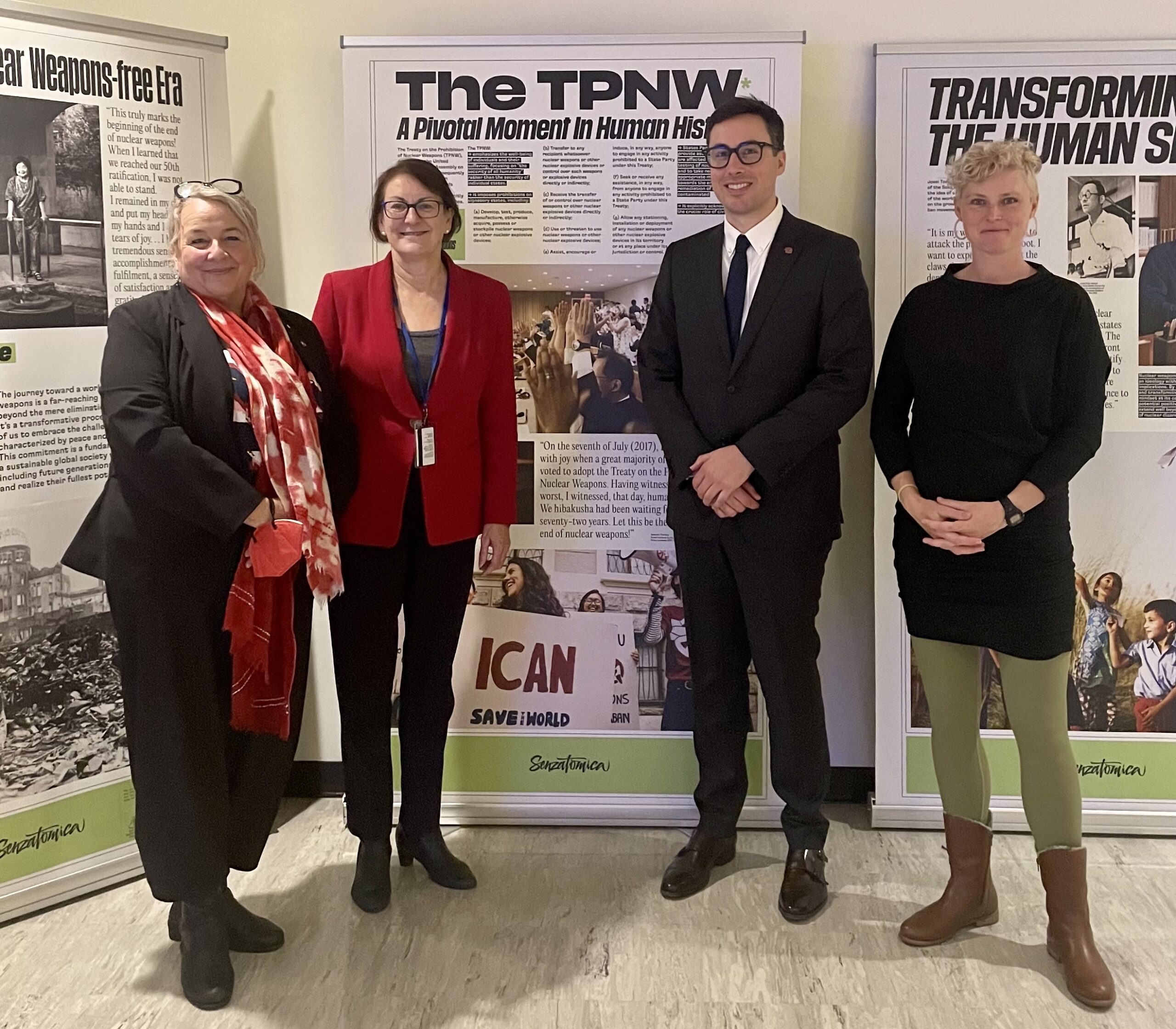
The new Labor member for Melbourne, VIC, supports the Treaty on the Prohibition of Nuclear Weapons. Pictured here with Tanya Plibersek MP and ICAN’s Nobel Peace Prize medal in April 2025.

Trish Cook

The new Labor member for Bullwinkel, WA, supports the Treaty on the Prohibition of Nuclear Weapons

Thank you to the TPNW champions who lost their seats:

Adam Bandt

Former Greens MP for Melbourne, VIC, and longtime supporter of the Treaty on the Prohibition of Nuclear Weapons

Zoe Daniel

Former independent MP for Goldstein, VIC, and vocal advocate supporter of the Treaty on the Prohibition of Nuclear Weapons since her election in 2022. Pictured here with ICAN in February 2025.

Max Chandler-Mather

Former Greens MP for Griffith, QLD, and supporter of the Treaty on the Prohibition of Nuclear Weapons since his election in 2022.

Stephen Bates

Former Greens MP for Brisbane, QLD, and supporter of the Treaty on the Prohibition of Nuclear Weapons since his election in 2022.

BACK TO NEWS

Affected communities lead the way at 3MSP

CAMPAIGN NEWS:

Affected communities lead the way at 3MSP

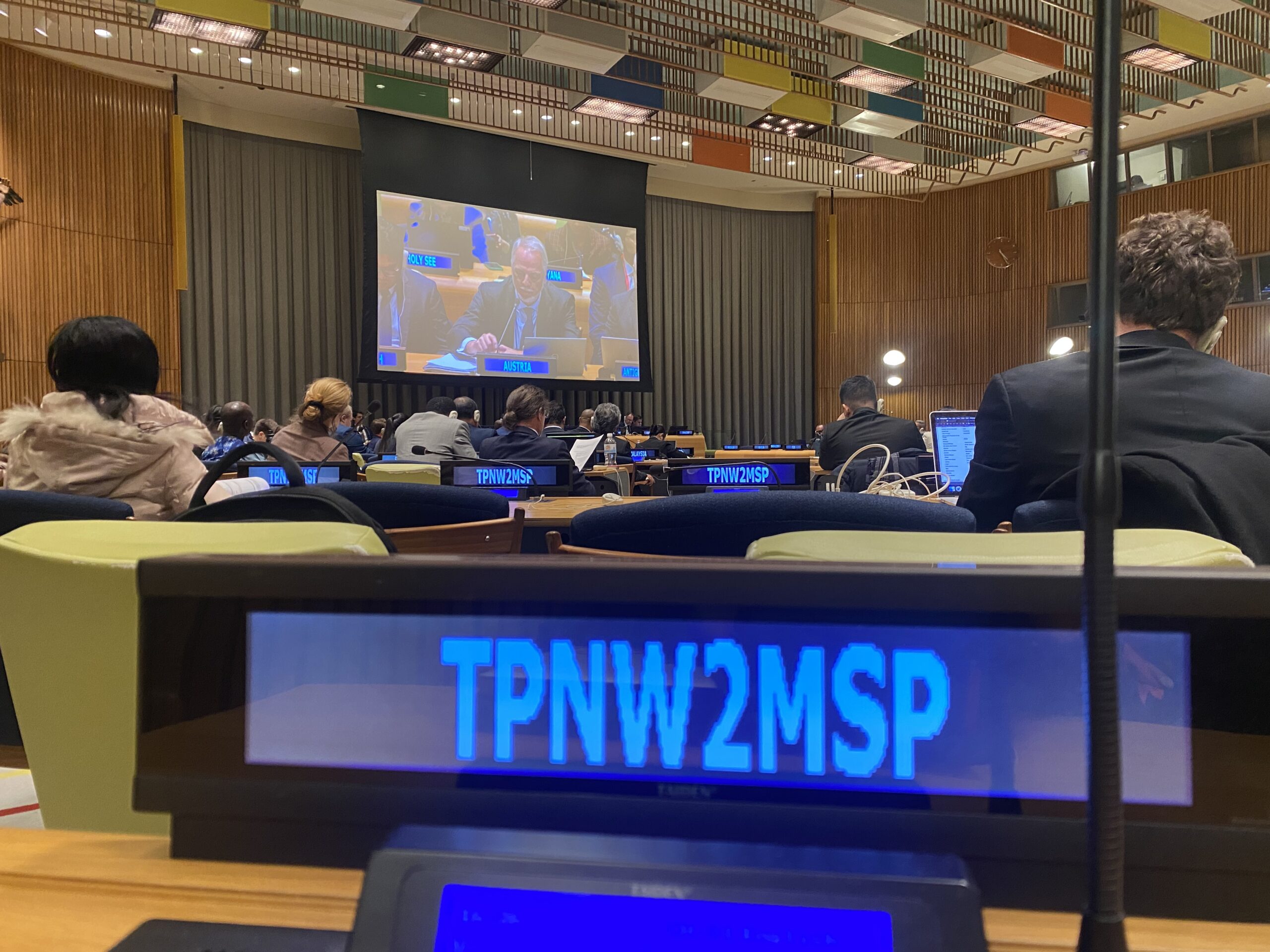
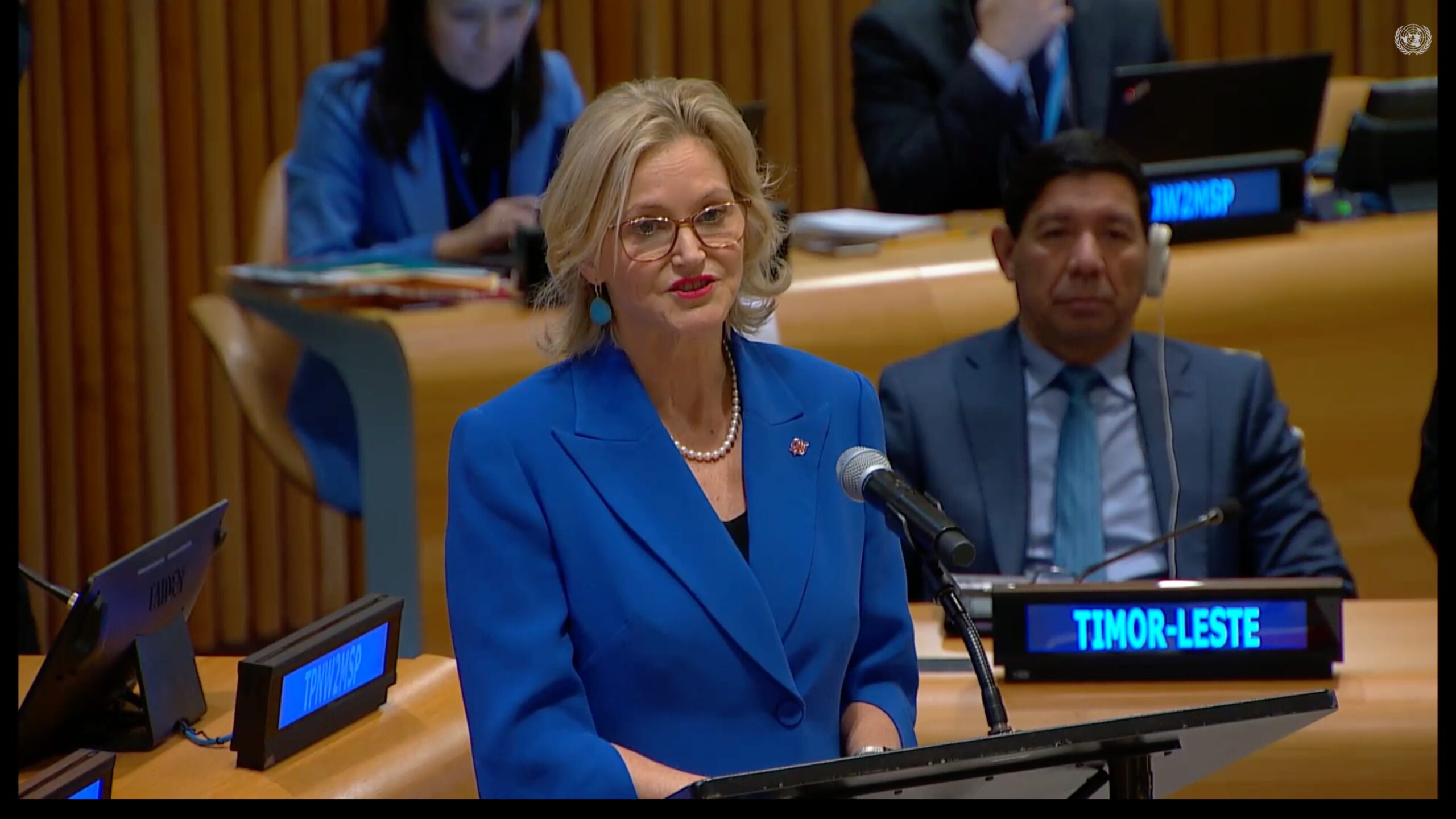
We’re back from a whirlwind week at the United Nations attending the Third Meeting of States Parties to the Treaty on the Prohibition of Nuclear Weapons (TPNW). Despite increased global tensions and rising nuclear risks, half the world is now on board with the Treaty, and they have been busy putting that plan into action this week.
86 countries participated in the meeting as states parties or observers, engaging in a robust and interactive debate during the week, adopting a political declaration and package of decisions. The meeting also counted the active participation of a thousand representatives from 163 civil society organisations, including many affected community voices, and nine International Organisations. Over 70 events took place in the context of the 3MSP, in the UN and across the city during Nuclear Ban Week. 
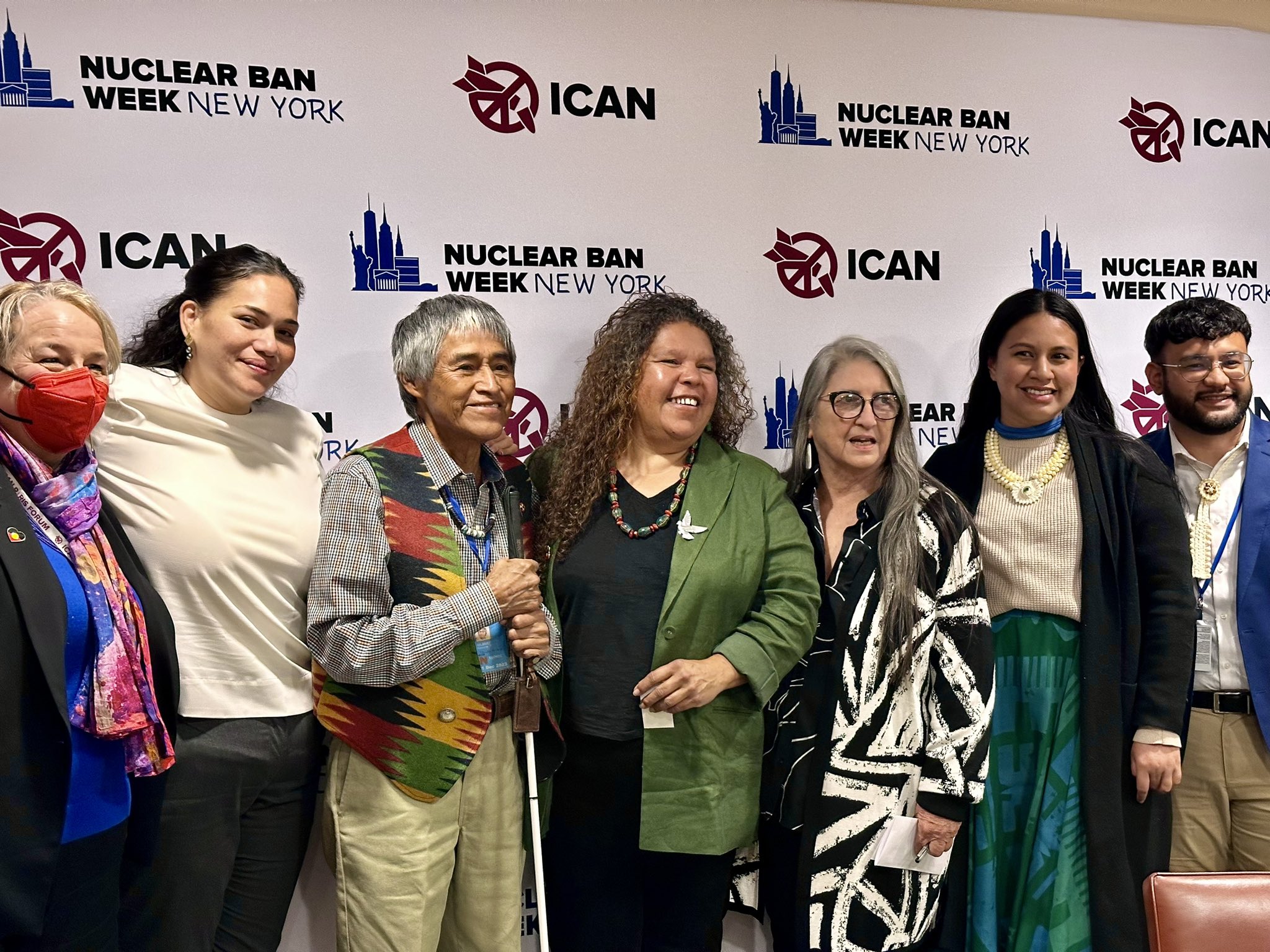
Once again, communities directly impacted by the use and testing of nuclear weapons took  to the floor of the conference and participated in many moving side events to share their lived experience and expertise, which informs ongoing work to embed support for affected communities in the TPNW’s implementation.

While a proposed international trust fund to support victim assistance and environmental remediation continues to gain momentum, affected communities made clear that support cannot wait. States must act now to implement practical support for all those affected by the legacy of the bomb and do more to ensure these weapons are never used again.

“Nothing but broken promises”: ICAN Ambassador, Karina Lester calls out Australia’s inaction on the TPNW

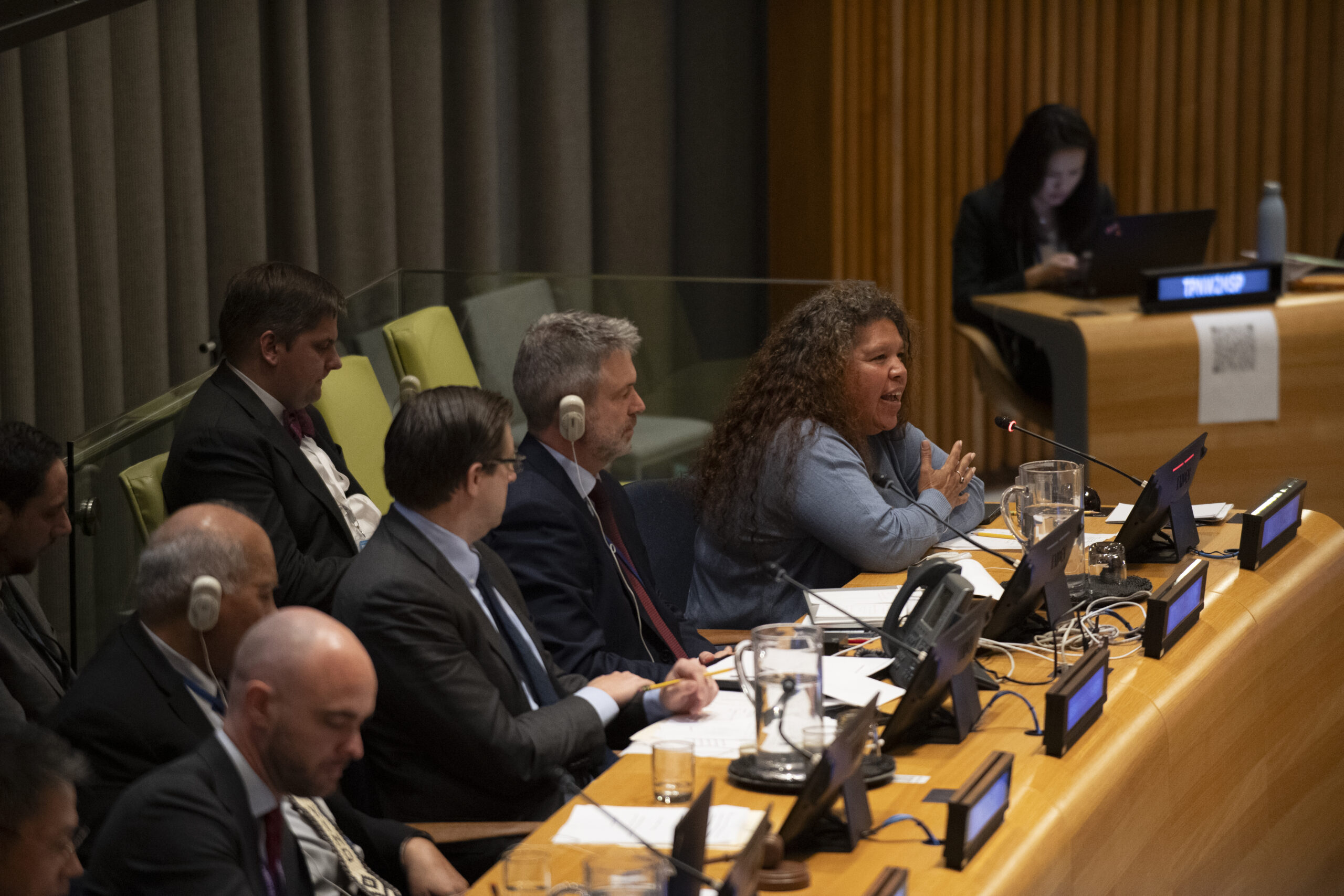
On Thursday, Yankunytjatjara-Anangu woman, second-generation nuclear test survivor, and ICAN Ambassador Karina Lester delivered a statement during the segment on Victim Assistance and Environmental Remediation and International Cooperation.

In her powerful statement, Karina outlined the expectations from affected community members worldwide for support under Articles 6 & 7 of the TPNW, which require states parties of the TPNW work collaboratively to provide support to communities impacted by the use and testing of nuclear weapons.

Karina also called out the Australian Government’s lack of action on the TPNW to date, and made clear that it is time for Australia to sign and ratify the TPNW, without delay.

I am concerned and deeply saddened that my own country has yet to sign and ratify the Treaty on the Prohibition on Nuclear Weapons. My country, my traditional lands, has felt the reality of nuclear weapons use. We even launched the movement thatbrought us to this day here in New York – the International Campaign to Abolish Nuclear Weapons.

Yet despite promises, despite the expectations of community members and parliamentarians, and despite the clear and urgent need, we are still
waiting.

Australia is the gap in our region. And this is shameful, nothing but broken promises. Many of our friends in the Pacific Islands and those in South East Asia have joined the Treaty. We call on our government to sign and ratify, to join this community of nations in working together to abolish nuclear weapons.”
In aninterview with NITV, Karina said that the impacts of the British Nuclear tests on her country are still felt today, more than 70 years later:
“We had the fallout fall onto our environment, our trees, animals, our sand dunes, our grasses, our food that we eat as well…. Affected communities in very remote South Australia who carry the scars and carry this burden and this trauma of this lived experience through generations, now our government has failed us.”

States recommit to dismantling the fallacy of nuclear deterrence:

While nuclear weapons states and their supporters continue to hold on to outdated policies of extended nuclear deterrence – which presumes the possession and positioning of nuclear weapons, or that of their nuclear-armed allies, prevents other nations from launching a nuclear attack – this week TPNW member states continued the work of challenging deterrence theory, and championing the message that states can instead look to security based on global solidarity and cooperation. 

The week-long meeting featured discussions with affected communities, scientists, academics, medical professionals and legal experts who pointed to not only to the undeniable violence of nuclear weapons and the ongoing threat they pose to humanity, but also to the inherent violence of denial – when nuclear armed states favour reinvesting, modernising and expanding their nuclear arsenals instead of redirecting those resources to address global issues like climate change and other social and economic challenges. 

The meeting concluded with a powerful Political Declaration rejecting nuclear weapons and challenging nuclear deterrence in the strongest agreed language in decades. It states:

“Nuclear deterrence is posited on the very existence of nuclear risk, which threatens the survival of all” and that instead of promoting security and stability “nuclear weapons are a threat to the security, and ultimately the existence, of all states, irrespective of whether they possess nuclear weapons, subscribe to nuclear deterrence or firmly oppose it.”

So what next for Australia?

Australia has now attended all three Meetings of States Parties to the TPNW as an observer. This ongoing engagement with the TPNW remains positive. However, as long as Australia continues to endorse nuclear deterrence, deny support to survivors of the bomb, and stall progress on signing and ratifying the TPNW, it remains part of the problem. Australia must stop being part of the problem and kickstart work on the solutions by joining the ban.

BACK TO NEWS

“Abolish Nuclear Weapons” 2025 print by TWOONE

CAMPAIGN NEWS:

“Abolish Nuclear Weapons” 2025 print by TWOONE

Art changes hearts and minds. Every movement needs art and the nuclear disarmament movement has a powerful history of mobilising public sentiment through creative expression in books, films, television, artworks, performance and dance.
This year, 2025, is 80 years since the dawn of the nuclear age. On 16 July 1945, the first nuclear explosion rocked the ground in New Mexico, US. Considered a terrifying success, a similar nuclear weapon was assembled and unleashed upon the city of Hiroshima, Japan, on 6 August 1945. Three days later, the same fate took the city of Nagasaki and almost all of its inhabitants. The war ended soon after, but that wasn’t because of the nuclear bombings, as popular narratives like to tell it. It was ending imminently anyway. Nothing justifies the wholescale, indiscriminate destruction and long-lasting radioactive violence of nuclear weapons.

ICAN Australia has commissioned an artwork by Melbourne-based Japanese artist Hiroyasu Tsuri, aka TWOONE, to commemorate the victims and survivors of Hiroshima, Nagasaki, and the Trinity test in New Mexico. Hiroyasu Tsuri (釣 博泰 Tsuri Hiroyasu, born 1985) is a multidisciplinary Japanese artist whose practice spans painting, sculpture, photography, video, sound, installations, and performance. Tsuri is  also known as TWOONE for his large-scale public murals showcased globally. His works are featured in prestigious institutions such as The National Gallery of Australia, the Straat Museum in Amsterdam, and the Museum of Urban and Contemporary Art (MUCA) in Munich.

Tsuri’s artwork “Abolish Nuclear Weapons” recalls the past and highlights survival, resilience and our overarching mission to make these weapons history. The origami paper cranes refer to the famous story of Sadako and the thousand paper cranes, and the global practice of folding cranes to promote peace and nuclear disarmament. The gingko leaves refer to the roughly 170 gingko trees that survived the Hiroshima bombing, when almost nothing else did. These “A-bombed trees,” or hibakujumoku, are still in Hiroshima today. The spider lily is a stunning and deeply symbolic flower, with meanings that vary in different cultures. In Japan, they are believed to be sacred flowers that protect the dead and guide them to the afterlife. At the core of the image is of course the Hiroshima Atomic Bomb Dome, formerly the Hiroshima Prefectural Industrial Promotion Hall. It is one of very few buildings that were left partially standing in the city centre of Hiroshima after 8:15am on 6 August 1945. 

To support ICAN’s ongoing work for a nuclear weapon-free world, please purchase a high-quality A2 art print at cost price, and make a tax-deductible donation to the campaign on top of your purchase. The prints are produced by Black Rainbow in East Gippsland, on 100% 200gsm recycled paper, with non-toxic inks, on a solar-powered printing press. The purchase price includes postage. Please enjoy!

BACK TO NEWS

It’s 89 seconds to midnight

CAMPAIGN NEWS:

It’s 89 seconds to midnight

MEDIA RELEASE

It’s 89 to midnight: Doomsday Clock announcement signifies nuclear threat is greater than ever


This morning (10am EST Tuesday January 28), The Bulletin of Atomic Scientists reset the Doomsday Clock to 89 seconds to midnight, surpassing its previous setting of 90 seconds to midnight. The new time indicates we are now at the most dangerous moment in history since the Doomsday Clock was launched in 1947—two years after the devastating atomic bombings of Hiroshima and Nagasaki.  

Today’s new setting of the global Doomsday Clock highlights the need for urgent action to reduce the growing threat of the accidental or deliberate use of nuclear weapons. 

The Doomsday Clock, a symbolic representation of our proximity to annihilation (midnight), is one of the most authoritative annual assessments of how humanity is tracking on the biggest issues: the existential threats posed by nuclear weapons and global heating. Each year in January, it is set by the science and security board of the Bulletin of Atomic Scientists – scientists and other experts with deep knowledge of nuclear technology and climate science.

The Bulletin of the Atomic Scientists attribute their decision to move the clock forward largely because of the proliferation of nuclear weapons and threats to use them, disruptive technologies like artificial intelligence, the Russian-Ukraine war, conflict in the Middle East, biological/pandemic threats and the escalating climate crisis.

With President Trump taking office in the US, he gains the ultimate authority over America’s nuclear arsenal and regains control of the nuclear “football,” launch codes, and authorizations—in other words he gains the power to commit mass murder and devastate our planet.

In response to the new time, Tilman Ruff AO, Associate Professor in the Nossal Institute for Global Health in the School of Population and Global Health, University of Melbourne and co-founder of the International Campaign to Abolish Nuclear Weapons (Australia), said: 

“Nuclear-armed states building nuclear weapons and delivery systems designed to last till the end of this century belies their obligation to negotiate a world freed from nuclear weapons. The only thing the figleaf of nuclear deterrence is reliably deterring is nuclear disarmament.

“We are “teetering near the edge” of unprecedented danger, but must not lose hope. We need action by governments and people that comes much closer to matching the immensity and urgency of the danger. Our best hope lies in the 2017 Treaty for the Prohibition of Nuclear Weapons (TPNW), now joined by very nearly half of the world’s nations, with a combined population of 2.5 billion.”

“The TPNW for the first time makes the worst weapon of mass destruction illegal in international law. It has changed nuclear debates and is stigmatising nuclear weapons and threats. It has already stimulated financial institutions managing over four trillion US dollars in funds to divest from companies profiting from building nuclear weapons. It is bringing to life long-overdue assistance for the victims of nuclear weapons use. And it provides the only internationally agreed framework for verifiably and irreversibly eliminating nuclear weapons. As Labor has committed to do, joining this treaty is the best immediate step responsible nations can take to wind back the Doomsday Clock.”


BACK TO NEWS

2MSP summary

CAMPAIGN NEWS:

2MSP summary

The Second Meeting of States Parties to the Treaty on the Prohibition of Nuclear Weapons took place at the United Nations in New York from 27 November to 1 December 2023. 94 countries and over 700 civil society delegates participated.

The Australian Government participated as a formal observer to the meeting, with federal Labor parliamentarian Susan Templeman MP serving as head of the delegation, after first observing the First Meeting of States Parties in June 2022.

The Meeting included a high-level opening session, panel discussions on the humanitarian impacts of nuclear weapons and on strengthening the prohibition on nuclear weapons, a presentation from the Scientific Advisory Group, general exchange of views and thematic discussions on the treaty’s provisions and areas of work.

Outside the formal meeting over 60 side events took place including campaigners meetings, panel discussions, film screenings, art exhibitions, performances, a parliamentarian conference, a Youth for TPNW conference, interfaith events, vigils and protests.

A strong theme of the conference was discussion on the theory of nuclear deterrence, which all nuclear-armed and nuclear-endorsing states currently espouse, including Australia. This theory was exposed, repeatedly, by delegations, academics and scientists, as being irresponsible, risky and a key obstruction to progress on disarmament.

A plan was developed to engage with non-states parties to articulate and promote the legitimate security concerns of TPNW parties and to “challenge the security paradigm based on nuclear deterrence.” Austria, under the leadership of Alexander Kmentt (President of 1MSP) will coordinate a consultative process involving states, civil society, the Scientific Advisory Group and other stakeholders and experts. Australia must engage with this process ahead of the Third Meeting of States Parties (3MSP).

In ICAN’s closing statement, Daniel Högsta said:

 “The declaration exposes the dangerous and morally disgraceful fallacy of “nuclear deterrence”, which for too long has been used to justify the indefinite retention of these earth-endangering devices – thus exposing all of us to unacceptable risk. Not only does nuclear deterrence theory undermine non-proliferation efforts; it also obstructs much-needed progress towards disarmament. We refuse to give it credence…


Though it is a young treaty, it is already having significant impacts. Soon TPNW states parties will make up a majority of states and this majority will only grow larger over time. Though we face many challenges in achieving the TPNW’s high aims, we remain confident we will get the job done.


We are leaving this meeting with renewed hope and determination.” 

Key links:

Next Steps: Intersessional working groups and focal points

Going forward, the work of the Scientific Advisory Group, intersessional working groups and focal points will continue, with the Vienna Action Plan serving as a key guide for practical actions. The intersessional structure includes:

  • Universalisation working group, co-chaired by South Africa and Uruguay
  • Victim assistance, environmental remediation and international cooperation and assistance working group, co-chaired by Kiribati and Kazakhstan
  • Article 4 working group (nuclear disarmament verification), co-chaired by Malaysia and New Zealand
  • Mexico will serve as the gender focal point
  • Complementarity of the TPNW with the existing nuclear non-proliferation and disarmament regime, with Ireland and Thailand as informal facilitators.

A new consultative process will get under way on the “security concerns of States under the TPNW” which will involve reporting to 3MSP with a comprehensive set of arguments and recommendations to:

  • To better promote and articulate the legitimate security concerns, threat and risk perceptions enshrined in the TPNW that result from the existence of nuclear weapons and the concept of nuclear deterrence;
  • To challenge the security paradigm based on nuclear deterrence by highlighting and promoting new scientific evidence about the humanitarian consequences and risks of nuclear weapons and juxtaposing this with the risks and assumptions that are inherent in nuclear deterrence.

Austria will coordinate this consultative process, which will involve states, civil society, the Scientific Advisory Group, the ICRC, ICAN and other stakeholders and experts.

Kazakhstan will preside over the Third Meeting of States Parties, under the Permanent Representative of Kazakhstan to the UN, Akan Rakhmetullin. It will be held within the week of 3-7 March 2025 at the UN Headquarters in New York.

High-level segment

The ICAN Executive Director, former federal Labor MP for Fremantle, WA, Melissa Parke, said “the colonial underpinnings of nuclear weapons, including the belief in superiority and the desire to control, guide efforts to enhance nuclear weapons today. Disarmament is imperative: the nuclear ban treaty lights the way forward.”

The President of the meeting, Juan Ramón de la Fuente Ramírez, Permanent Representative of Mexico to the United Nations, noted that “nuclear weapons imperil the survival of humanity”. He highlighted the importance of the roadmap set out by the TPNW Action Plan and called for its full implementation.

The UN Disarmament High Representative Izumi Nakamitsu said “the TPNW is more important than ever… it is a security imperative to make progress on nuclear disarmament”. She urged observers to take an active part in the meeting.

Thematic discussion on the humanitarian impact of nuclear weapons

Patricia Lewis, co-chair of the Scientific Advisory Group, spoke about the need to consider nuclear weapons risk as a product of the probability of use intersecting with the consequences of use. “Depending on where used, hundreds of thousands of people could be killed instantaneously. We also know we could end up with a existential risk to humanity.” She urged the conference to consider an updated UN-mandated global scientific study on the risks and consequences of nuclear weapons use, including the climatic, physical and social effects. Lewis queried “How do we understand this complex interaction between current climate situation with what might happen in a nuclear war, and what the societal as well as environmental impacts might be?”

Sébastien Philippe of Princeton University noted that a full-fledged US-Russia nuclear war would result in at least 90 million casualties instantly, and that the catastrophic effects of nuclear weapons extend far beyond their intended targets.

Nick Ritchie, University of York, said “claims about the war prevention benefits of nuclear deterrence, claims that are used to justify the risks of a shared catastrophe- the research shows these claims to be empirically contested and contingent on context and at times contingent on luck”.

Patricia Jaworek, of the Nuclear Threat Initiative, said that today’s multi-polar world is “ripe for misconceptions and miscalculations”. Further, “the concept of nuclear deterrence, which is at the core of the current nuclear order and supposedly keeps us safe, is in fact very fragile, and this fragility is amplified by policy makers that choose to brush the consequences aside.”

Suechi Kido, a survivor of the Nagasaki bomb at the age of 5, implored “Why doesn’t Japan sign the TPNW? We’ve been telling them to join [this meeting] as an observer, but they are not joining us. So why? They are standing with the nuclear deterrence policy of the US.”

Affected communities

People impacted by nuclear weapons use, testing and development played a major role in the meeting and side events, delivering statements, speaking on panels and conducting media interviews.

Addressing the meeting on a panel discussion, second-generation nuclear test survivor, Yankunytjatjara-Anangu woman and ICAN Australia Ambassador Karina Lester said “people still suffer to this day. We know our lands are poisoned. We know the fallout contaminated our country and our families, our people who move through those traditional lands. We know the land I live on had high levels of radiation fallout.” She called for the meeting to not only include the voices of impacted people but to ensure they are at the centre of discussions.

Karina said “I talk about intangible cultural heritage, the bombs removing chapters of our story. Our tjukurpa. These stories are important to us. How do we bring them back? We want our contaminated lands to be cleaned up. Our elders are passing and this work on victim assistance and environmental remediation is crucial before we lose our elders.” She concluded by saying that if Australia wants to do anything meaningful on nuclear weapons then it must make joining the TPNW a top priority.

During a discussion panel hosted by the Nuclear Truth Project, Hinamoeura Cross, MP for Maohi Nui (French Polynesia) said “after so many years of lies, with the slogan ‘the French nuclear tests are clean’, it is important for us to obtain the truth… By meeting affected communities, it’s helped me answer many questions I’ve been asking myself, including ‘ are our illnesses linked to the atomic bomb?’” She spoke about the impact of the 193 nuclear weapons tested by France, saying “In Maohi Nui we really have to decolonise memories and minds. We have to overcome the trauma of the colonial history.” 

Pam Kingfisher, Co-Coordinator of the Nuclear Truth Project, Cherokee woman said of her childhood living near the Hanford nuclear weapons production facility, where her father worked; “When I grew up we knew all the snakes and rabbits were hot. How did we know that? Hanford had scientists from the get-go, they know those rabbits were hot, information leaked. We were told not to hunt them.”

Petuuche Gilbert from Acema, New Mexico, spoke about the taking of land to establish the secret city of Los Alamos to develop the bomb. He spoke about the Jackpot uranium mine, which was the largest open put uranium mine in the world, it’s impacts, and the serious need for health research “many people are dying from cancer. They don’t know why.”

Universality – Article 12

Article 12 of the TPNW compels states parties to actively pursue its universalisation. The Co-Chairs of the informal working group on universality were South Africa and Malaysia. From the 2MSP going forward, it will be chaired by South Africa again, and Uruguay. The Vienna Action Plan contains 14 actions on Article 12, which will continue to be an important guide. 

In their statements, states shared the activities they had undertaken to fulfil their obligations under Article 12, including regional workshops and roundtables, bilateral meetings and other events. Malaysia stated that “universalisation is not just about getting more signatures and ratifications but also moving forward towards the goals of the treaty.” South Africa said that ICAN and the International Committee of the Red Cross are “fundamental in universalisation efforts.”

The International Trade Union Confederation, representing 192 million workers in 167 coutnries and territories delivered a powerful statement opposing weapons of mass destruction and militarism more broadly, stating “when we see some 32 wars or conflicts around the world, it is imperative that we take account and recognise the fundamental vision of unions for peace,” and that our response should be collective.

Italian NGO Senzatomica criticised NATO states’ claims that they can’t support the TPNW due to their obligations to NATO, saying “what of NATO members’ obligations to the UN and to their citizens?” Senzatomica outlined why NATO states face no legal impediment to becoming TPNW states parties, which is confirmed by legal analyses in several NATO states. The founding document of NATO does not mention nuclear weapons, but does set out the importance of the rule of law. “By joining the treaty NATO states can help build a robust norm againstnuclear weapons, diminishing pressure for nuclear arms races and opening pathways to disarmament.” They concluded by saying that there is mounting public pressure for such action, and that governments cannot ignore the will of the people forever.

Towards the elimination of nuclear weapons – Article 4

Article 4 of the TPNW looks at the verification of disarmament by nuclear armed states that can either “join and destroy” or “destroy and join”. Co-Chairs of the informal working group on Article 4, Mexico and New Zealand, presented their report. They spoke about the complexity of Article 4, and the useful example provided by South Africa’s process to eliminate its nuclear weapons stockpile. The work required under this Article is long-term, and “gets to the core of what the treaty is trying to achieve”. The Co-Chairs noted that there has been some criticism of this article, which they attributed to misunderstanding or “nuclear politic”, saying these critiques should be called out. They noted that verification under the Biological Weapons Convention is still in the early stages of development, and that serious commitment from all TPNW states parties will be necessary to “make progress on this crucial pillar of disarmament.”

The Scientific Advisory Group noted the work underway on Article 4 in the scientific and academic community, as well as the need for capacity building for disarmament verification.

Mexico noted that the verification regime that exists within the International Atomic Energy Agency context addresses the non-proliferation of nuclear weapons to new countries, and that “we need to build a new verification regime that ensures countries that have had or have nuclear weapons can discontinue them, in a way that is verifiable and in a permanent manner. It’s the first time we have a treaty that specifies this requirement.” Even though there are examples, such as South Africa, this hasn’t been done multilaterally, and there is not yet a competent international authority.

Articles 6 and 7 – victim assistance and environmental remediation, international cooperation and assistance

The intersessional working group on Articles 6 and 7 is chaired by Kiribati and Kazakhstan, both states that are deeply affected by past nuclear testing programs conducted by colonial powers. Their report discussed a proposed trust fund, which would provide aid to affected community members and support remediation efforts. It would help fulfil the humanitarian goals of the treaty, as well as Articles 6 and 7. Questions to be decided include who should be allowed to contribute, who and what should be eligible to receive funds, what projects should be funded, who decides on the grants, should there be restrictions, and what reporting and accountability is necessary?

The Co-Chairs recommended the working group discuss the adoption of a trust fund under the stewardship of the current co-chairs, and to develop terms of reference to be proposed, and a trust fund established at 3MSP.

These recommendations, as well as a decision to adopt a reporting guideline and format on Articles 6 and 7 for voluntary use by states parties, were adopted at the conclusion of the conference.

New Zealand spoke about the long shadow of nuclear testing in the Pacific, and how this legacy intersects with the impacts of climate change.

Costa Rice called for work on Articles 6 and 7 to meaningfully involve affected communities, noting that “reporting on the needs of victims and environmental pollution encourages states parties to act on their obligations, share information and identify the needs of affected states.” It recommended the Vienna Action Plan actions on Articles 6 and 7.

Fiji welcomed progress on an international trust fund and urged that it must not be used by those responsible for nuclear testing in circumvention of joining the treaty.

The Holy See said that Articles 6 and 7 “serve to heal the scars that nuclear weapons have inflicted on individuals, communities and our common home… We cannot pretend to be healthy in a world that is sick.”

The representative for Kiribati, a fourth generation survivor of nuclear testing, spoke about the critical importance of youth engagement, urging states to “work tirelessly towards a world without nuclear weapons where individuals are no longer victimised and the environment is restored.”

ICAN’s statement was presented by Hinamoeura Cross of Maohi Nui, who said “We were the guinea pigs of the French laboratories for 30 years and today we do not have the medical facilities to deal with the consequences.” She urged states to be ambitious in their discussions of a trust fund, with the goal of implementing it at 3MSP. “The work of states parties has to have the goal of really making a difference, to do it with and for the impacted communities”, declaring that ICAN remains committed to this work.

Complementarity with the existing nuclear non-proliferation and disarmament regime

Ireland and Thailand will continue to serve as the Co-Chairs of the informal working group on complementarity. They reported on work done, and spoke about the commonalities between the TPNW, nuclear Non-Proliferation Treaty (NPT), the Comprehensive Test Ban Treaty (CTBT) and regional nuclear weapon free zone treaties. Mexico spoke about the TPNW being in keeping with Article 6 of the NPT, which calls for effective measures on nuclear disarmament.

Norwegian People’s Aid spoke about how the TPNW’s safeguards provisions have continued to play an important role in increasing states’ adherence to both Comprehensive Safeguards Agreements and Additional Protocols, outlining safeguards actions taken by states during 2022 and 2023. “This is yet another way that the TPNW is making a tangible difference.”

ICAN welcomed

“the strong international consensus on complementarity of TPNW with other elements of nuclear non-proliferation and disarmament regime, in particular the NPT…

The TPNW is undoubtedly an effective measure for nuclear disarmament as stipulated by article 6 of the NPT. It was clear at the time of the NPT’s negotiation in the 1960s that additional legal instruments would be needed to provide a framework for achieving nuclear disarmament. The single sentence comprising Article 6 would not suffice…

The two treaties can and do exist side by side and are mutually reinforcing.”


BACK TO NEWS