Media Release: Labor re-commits to signing nuclear weapon ban

CAMPAIGN NEWS:

Media Release: Labor re-commits to signing nuclear weapon ban

A promise that now needs to be progressed: Labor re-commits to signing treaty banning nuclear weapons

18th August, 2023

The International Campaign to Abolish Nuclear Weapons (ICAN) welcomes the reaffirmation of Labor’s commitment to sign and ratify the landmark Treaty on the Prohibition Nuclear Weapons (TPNW), but regrets that no timeline has yet been given for acting on this long standing party pledge.

At its national conference in Brisbane, Labor reaffirmed its commitment to join the TPNW, which was first agreed by the party in 2018 at the initiative of Anthony Albanese, who said at the time that it represented “Labor at our best”.

The reformulated policy, approved by conference delegates on Friday: 

  • Reaffirms Labor’s commitment to sign and ratify the TPNW in government, after taking account of three matters.
  • Commits Labor to consider steps on assistance for affected communities and environmental remediation in relation to the British nuclear tests in Australia, and nuclear testing in the Pacific, consistent with Articles 6 and 7 of the TPNW.
  • Welcomes the positive steps that have been taken by the Labor Government to engage with the TPNW, including by attending the First Meeting of States Parties and ending Australia’s opposition to the treaty at the UN First Committee in 2022.

Federal member for Fremantle Josh Wilson MP moved the amendment, saying Labor’s updated policy “demonstrates that Labor values the TPNW and takes it seriously as a new and promising form of international agreement that seeks to shift the otherwise dangerous status quo on nuclear weapons.” 

At an event hosted by ICAN, Wilson confirmed that Australia will attend the Second Meeting of States Parties to the TPNW from 27 Nov – 1 Dec 2023 at the UN in New York.

“We welcome this reaffirmation of Labor’s longstanding commitment, but it’s not enough to keep promising to sign the treaty without acting. We want to see the Prime Minister put pen to paper, without delay. Labor’s commitment on nuclear disarmament and non-proliferation will be hollow if Australia fails to do so,” said ICAN International’s newly appointed Executive Director, Melissa Parke, a former Labor MP for the federal seat of Fremantle.

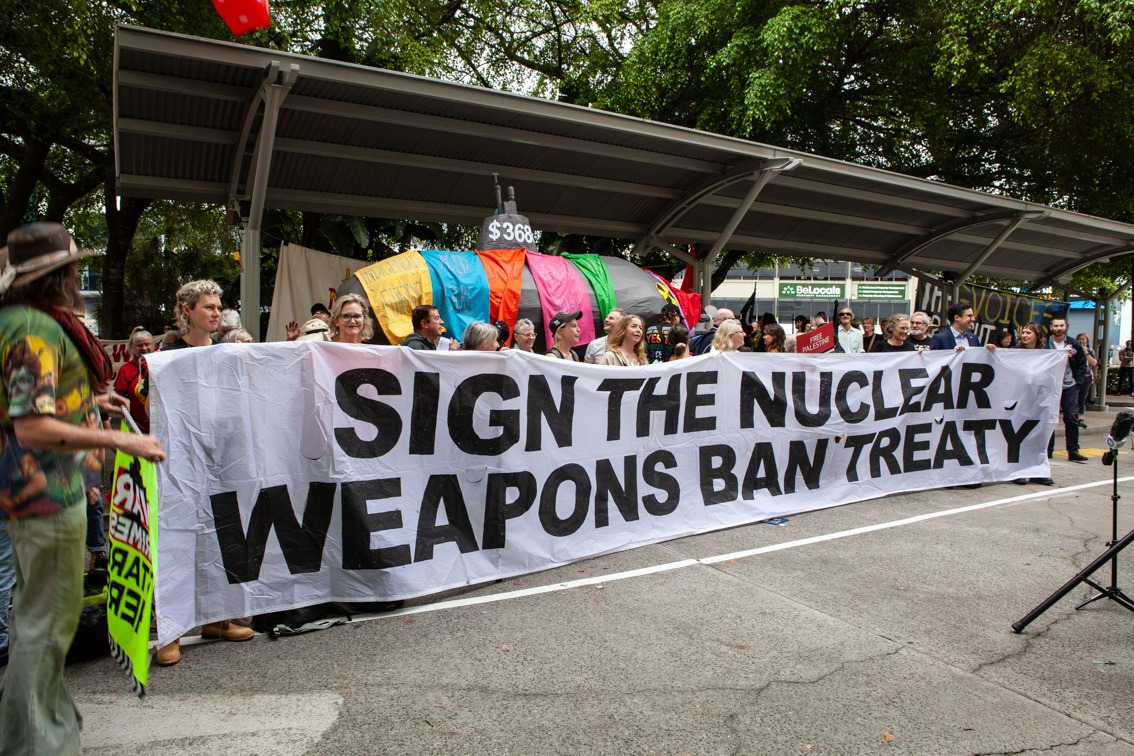
“Signing the TPNW is especially important given regional concerns about Australia’s acquisition of nuclear attack submarines under the AUKUS partnership with the United States and United Kingdom, which have nuclear arsenals,” said Parke. “The TPNW would prevent current and future Australian governments from engaging in or assisting with nuclear-weapon-related activities in any way.”

“Australia has a proud history of championing nuclear disarmament – Labor has a proud history of championing nuclear disarmament,” Parke said. “It’s time for the Australian government to honour our history, as well as our future, and sign the nuclear weapons ban treaty.”

NEW LABOR PLATFORM TEXT

Statement in Detail

Nuclear Disarmament

1. Acknowledges the growing danger that nuclear weapons pose to us all and the urgent need for progress on nuclear disarmament.

2. Acknowledges the deep and ongoing consequences of nuclear testing in Australia, which have been borne disproportionately by our First Nations peoples, as well as testing in the Pacific.

3. Commits itself to redoubling efforts towards a world without nuclear weapons and strengthening the non-proliferation regime.

4. Congratulates the International Campaign to Abolish Nuclear Weapons (ICAN) on its work in returning to global prominence the cause of nuclear disarmament;

5. Acknowledges the value of the Treaty on the Prohibition of Nuclear Weapons (the Ban Treaty) which came into force on 22 January 2021,and its aspiration to rid the world of nuclear weapons for all time; 

6. Welcomes the positive steps taken by the Albanese Labor Government to engage with the Ban Treaty, including by sending an observer to the first Meeting of States Parties to the TPNW in Vienna, June 2022 and changing Australia’s vote on the annual UNGA resolution on the TPNW in 2022 from ‘oppose’ to ‘abstain’ and encourages attendance at the second Meeting in New York, November 2023.

7. Acknowledges the centrality of the US Alliance to Australia’s national security and strategic policy.

8. Labor in government will sign and ratify the Ban Treaty, after taking account of the need to:

a) Ensure an effective verification and enforcement architecture;

b) Ensure the complementary interaction of the Ban Treaty with the longstanding Nuclear Non-Proliferation Treaty;

c) Work to achieve universal support for the Ban Treaty.

9. Labor will take urgent action to reduce the risk of nuclear war by continuing its proud record of seeking nuclear disarmament and non-proliferation by:

a) Contributing to global progress towards addressing the matters outlined in paragraph 8 by;

b) Advocating to the United States that it actively negotiateswith Russia, China and other nuclear armed states to develop a follow-on treaty to the New START treaty with a view to realising the objective of Article VI of the Treaty on the Non -Proliferation of Nuclear Weapons (NPT), namely, a world free of nuclear weapons; 

c) Seeking to work with partners and allies to build upon the International Commission on Nuclear Non-Proliferation and Disarmament to develop an initiative which proposes a way of working with states possessing nuclear weapons to achieve Article VI of the NPT and encouraging transparency among all states with nuclear weapons in relation to their use doctrine and the composition of their arsenals, while continuing to strengthen non-proliferation goals in the Indo Pacific region; and

d) Considering steps that can be taken with respect to further assistance for affected communities and further environmental remediation in relation to the British atomic tests that occurred on Australian territory, consistent with Article 6 of the Ban Treaty, and considering further collaboration and assistance to Pacific Island communities affected by nuclear testing in the Pacific, consistent with Article 7 of the Ban Treaty.

BACK TO NEWS

The new International ICAN Executive Director!

CAMPAIGN NEWS:

The new International ICAN Executive Director!

Australian to spearhead global campaign to end nuclear weapons.

Melissa Parke, former MP for Fremantle, government minister and human rights lawyer for the UN, is set to take on the position of Executive Director for ICAN International in Geneva. Ms Parke will take up the role on 1 September. She succeeds Beatrice Fihn, who stood down earlier this year.

Melissa Parke has a lifelong commitment to social justice and nuclear disarmament and has served as an ICAN Australia Ambassador since 2017, in which capacity she has championed the Treaty on the Prohibition of Nuclear Weapons (TPNW).

As Executive Director she will focus on ensuring the campaign maintains momentum, escalating adherence, signatures and ratifications of the TPNW, thereby continuing to strengthen this new norm in international law that delegitimises and stigmatises the most destructive and inhumane weapons ever created.

Melissa Parke said: “I am honoured to be taking up this important role in the global campaign to rid the world of these weapons of mass destruction. The only effective treatment for a nuclear holocaust is prevention.”

“As an Australian, I’m looking forward to the day the Australian Government signs on to the treaty, as Labor has promised to do. While Australia has done important work on other weapons treaties, and taken some meaningful steps on nuclear disarmament, we remain on the wrong side of history until we pick up a pen and join the ban. Nothing less will do.” 

ICAN Australia Director, Gem Romuld, says she is delighted to hear of the appointment of Ms Parke to the international role. “As a former federal Minister, UN human rights lawyer, and ICAN Ambassador for many years, Melissa’s experience and expertise will be invaluable to the campaign, especially now with the risk of nuclear weapons use as high as during the Cold War,” said Romuld.

Melissa Parke is a former Australian Labor Minister for International Development and served as Member of Parliament for Fremantle from 2007 to 2016, in which capacity she argued for nuclear disarmament. Before becoming an MP, Ms Parke served as an international lawyer with the United Nations in Kosovo, Gaza, New York and Lebanon. More recently, she served as a member of the UN Group of Eminent Experts on Yemen.

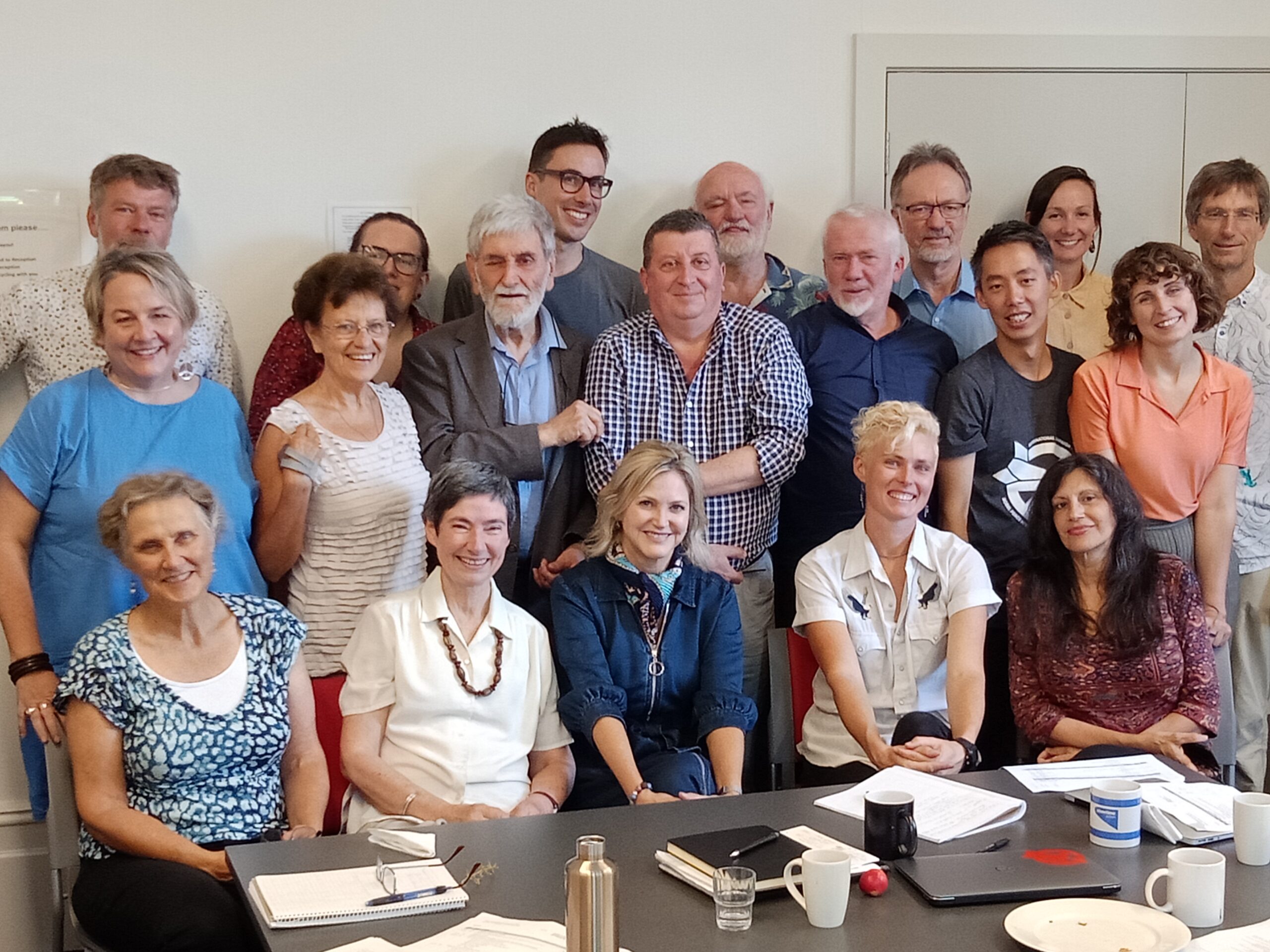
Image: Melissa Parke at the ICAN Planning Day in Melbourne in 2020.


BACK TO NEWS

Briefing for Labor delegates

CAMPAIGN NEWS:

Briefing for Labor delegates

This is a briefing note on the Treaty on the Prohibition of Nuclear Weapons for delegates and Labor members ahead of the 49th National Labor Conference from 17-19 August in Brisbane, Australia.

WHAT IS THE TPNW?

  • The first global treaty to comprehensively outlaw nuclear weapons, making it illegal to possess, test, host, develop, transfer, stockpile, use, threaten to use, or assist, induce or encourage any of these acts.
  • It sets out a framework for all nations to pursue the total elimination of nuclear weapons via binding and verifiable agreements.
  • It was negotiated in 2017 and adopted by the UN with the support of 122 countries. To date, 92 states have signed on and of these 68 states have already ratified the treaty.
  • The Treaty grew from an Australian initiative and ICAN received the 2017 Nobel Peace Prize for advancing this work.

    WHAT IS LABOR’S POSITION?

    • Labor supports the TPNW and committed to sign and ratify it in government at the 2018 national conference, in a resolution moved by Anthony Albanese and seconded by Richard Marles. This policy was reaffirmed in 2021 and has been backed by almost every state and territory Labor branch, as well as many local branches, unions and parliamentarians.
    • The platform policy refers to the need to “take account” of several prudent considerations that pose no barrier to signature and ratification: TPNW/NPT complementarity, the need for a strong verification framework and the need to seek universalisation. Further detail on the considerations is here.
    • The Government attended the First Meeting of States Parties to the TPNW as an observer, and ended Australia’s opposition to the treaty by abstaining on a resolution vote at the 2022 UN First Committee.
    • In April 2023 the Foreign Minister said the TPNW has “substantial normative value“.
    • The government has said that it “will consider the TPNW systematically and methodically” and “engage closely with our international partners – including the United States – as part of this process”.

    WHAT DOES AUKUS MEAN FOR THE TPNW?

    • Nothing in AUKUS prevents or precludes Australia from joining the TPNW. The TPNW does not prohibit nuclear-propelled submarines.
    • AUKUS escalates the need for Australia to join the treaty to reassure the Australian public and our region that this and future governments will never acquire, host, support or assist with nuclear weapons possession and use in any way.
    • ICAN opposes Australia’s acquisition of nuclear-propelled submarines, as this would undermine the 1970 nuclear Non-Proliferation Treaty, escalate tensions in our region and increase the priority of Australian sites for nuclear or conventional attack.
    • Signing the TPNW is the best assurance mechanism that AUKUS nuclear-powered submarines will not become a precursor to any future Australian nuclear weapons ambitions.

    IS AUSTRALIA CURRENTLY COMPLIANT WITH THE TPNW?

    • No, by claiming protection under the US nuclear arsenal in our defence posture Australia is breaching Article 1(e) of the TPNW, by encouraging the possession and potential use of nuclear weapons.
    • Australia would also be in breach if it assisted another country to use or threaten to use nuclear weapons with targeting information.

    WHAT NEEDS TO CHANGE FOR AUSTRALIA TO BECOME COMPLIANT?

    • Australia must cease claiming protection from the US nuclear arsenal in public statements and defence policies.
    • Australia must ensure that joint defence facilities such as Pine Gap would not involve Australian assistance with the targeting or use of a nuclear weapon.

      WHO ELSE SUPPORTS IT?

      • Currently 111 federal parliamentarians have signed the Parliamentary Pledge to work for Australia to sign and ratify the treaty, including almost 80% of the Labor caucus.
      • Over 280 current state and territory parliamentarians.
      • Over 60 faith-based organisations.
      • A wide range of civil society organisations including the Australian Local Government Association, Australian Medical Association, Australian Catholic Bishops Conference, ACTU, Australian Red Cross.
      • 55 former Australian Ambassadors and High Commissioners.
      • 43 local councils.

      WHAT ARE THE NEXT STEPS?

      • Labor should reaffirm its commitment to sign and ratify the treaty and follow through by signing in this term of government. Ratification will take several years to complete but signature can and should happen speedily.
      • The Australian Government should support the TPNW in international fora, including by voting in favour of resolutions that support the treaty and acknowledge the devastating humanitarian impacts of nuclear weapons. Australia should attend the Second Meeting of States Parties to the TPNW in Nov/Dec 2023 at the UN in New York as an observer, and either sign beforehand or announce its intention to sign at this forum.

      FRINGE EVENT AND VR EXPERIENCE AT CONFERENCE

      • ICAN is hosting a Fringe event Labor and the nuclear weapon ban treaty at the National Conference on Friday 18 August at 2-3pm, with Josh Wilson MP, Linda Scott (ALGA), Imogen Sturni (ASU), Melissa Parke and Robert Tickner (both former Labor Ministers and ICAN Ambassadors).
      • The incredible Virtual Reality experience On the Morning You Wake (to the end of the world) will be available at the ICAN stall throughout the conference.

      BACK TO NEWS

      And that’s a wrap! Atomic Survivors’ Delegation.

      CAMPAIGN NEWS:

      And that’s a wrap! Atomic Survivors’ Delegation.

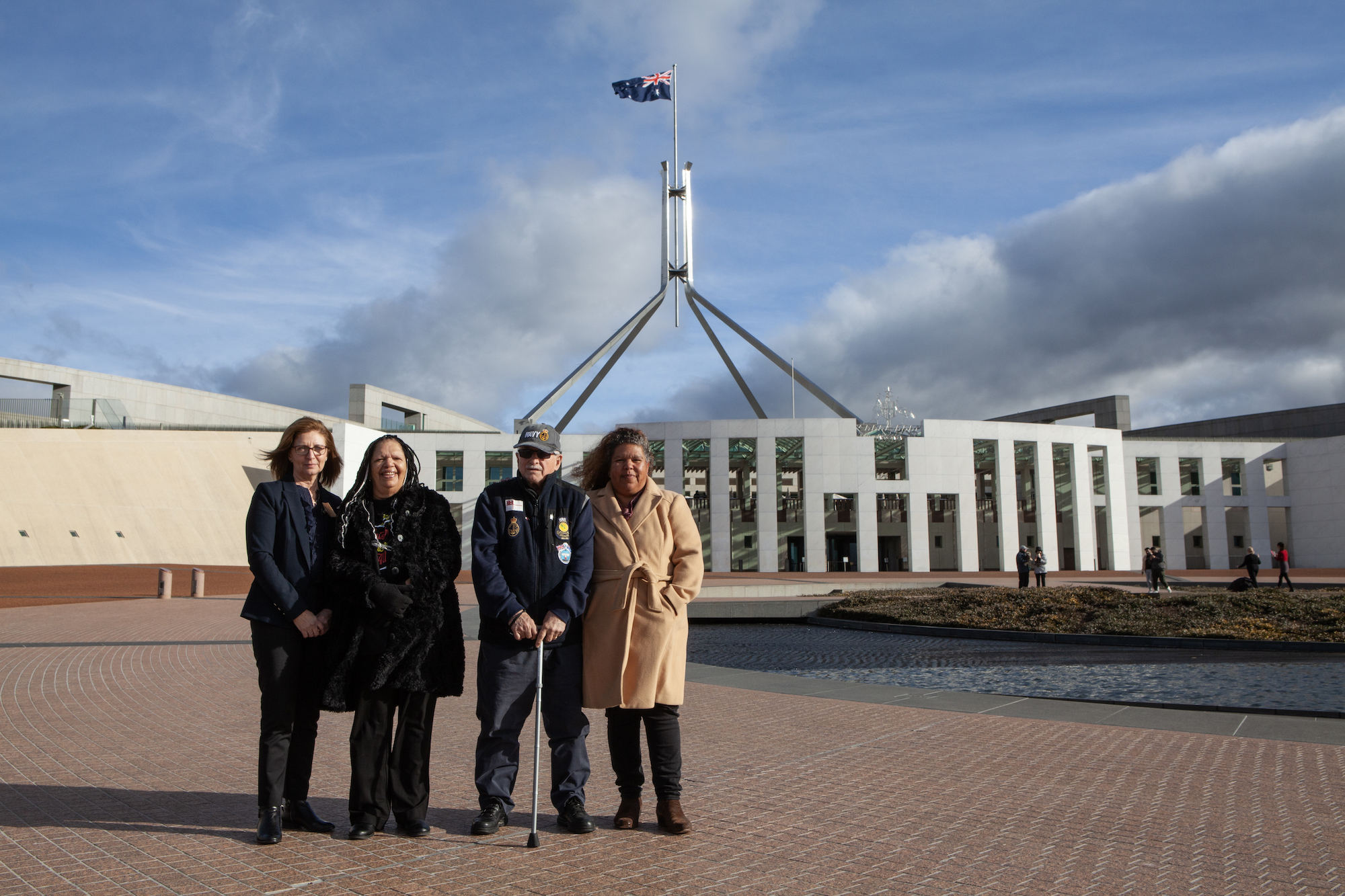
      Last week, four special people that know intimately the personal impacts of nuclear weapons testing, on physical health, mental health, and on country, travelled to Parliament House in Canberra.

      They brought their expertise and personal testimonies to speak with parliamentarians about recognition, respect, and repair, and to urge Australia to sign and ratify the Treaty on the Prohibition of Nuclear Weapons.

      The delegates went from meetings, to phone interviews, to TV studios, to events and to more meetings. They criss-crossed the entire Parliament House. They met with the Foreign Minister and the office of the Prime Minister, Assistant Ministers and parliamentarians from across the political spectrum.

      They spoke about the shock of witnessing a nuclear test, the post-traumatic stress disorder that followed, the oily black mist that coated and poisoned the land, the wide range of mental and physical health impacts, the loss of loved ones far too early, the lack of recognition of suffering, the lack of accountability, the impact of government lies and obfuscation.

      They argued that Australia must join the ban to prevent such humanitarian harm from happening again, and also to fulfill it’s obligations under Articles 6 & 7 to provide assistance to victims and remediate impacted environments. It’s about the past, the present and the future.

      THE DELEGATES

      Karina Lester, Walatina SA

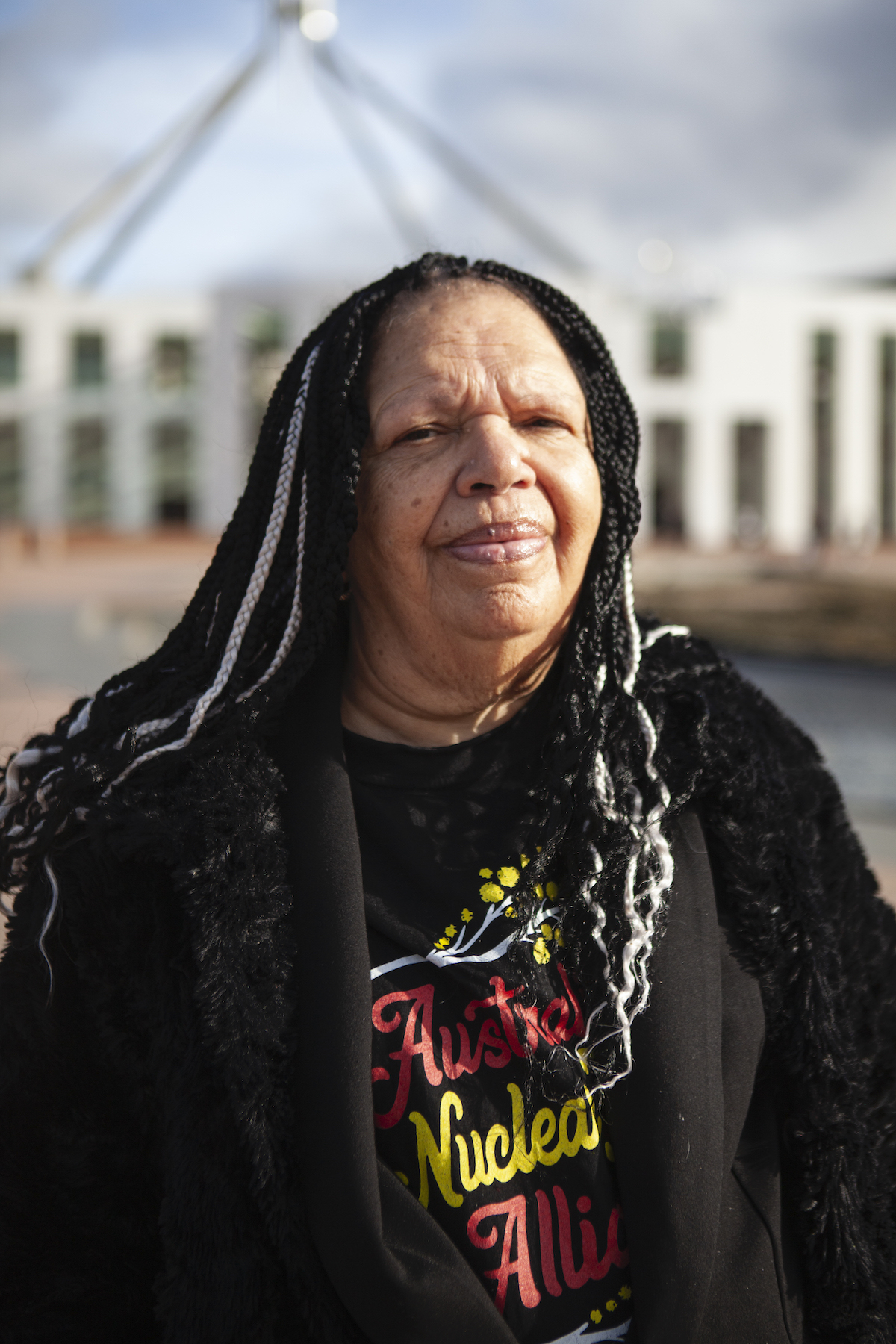
      Karina Lester is a Yankunytjatjara Anangu woman from the Anangu Pitjantjatjara Yankunytjatjara Lands (APY Lands) in the far northwest of South Australia. Karina is a senior Aboriginal language worker, an ICAN Ambassador and a prominent nuclear free advocate. Her father was blinded by the Emu Field nuclear tests.

      “Our mob were not informed of those tests that were about to take place on our traditional lands. Consent was never given by Anangu for the Emu Field tests… Anangu need to know about these harms because we’ve lived with what these weapons have done to our families. Our loved ones died, our loved ones suffered, and we are the generations that continue to share those stories.”

      June Lennon, Port Augusta SA

      June is a Yankunytjatjara, Antikarinya and Pitjantjatjara woman. She is Director of the Yankunytjatjara Native Title Aboriginal Corporation. June was four months old when the Totem 1 nuclear bomb was detonated at Emu Field. Her mother, Lallie, and brother Bruce, were recipients of compensation due to their ill-health, caused by radioactive contamination.

      “My older sister Jenny was holding me sort of under a tarpaulin that dad had, you know, thrown over a branch of a tree… Where we were after the bomb went off the black mist came over and settled on all the trees and everything else, so that effectively took away our supermarket.”


      Douglas Brooks, Adelaide SA

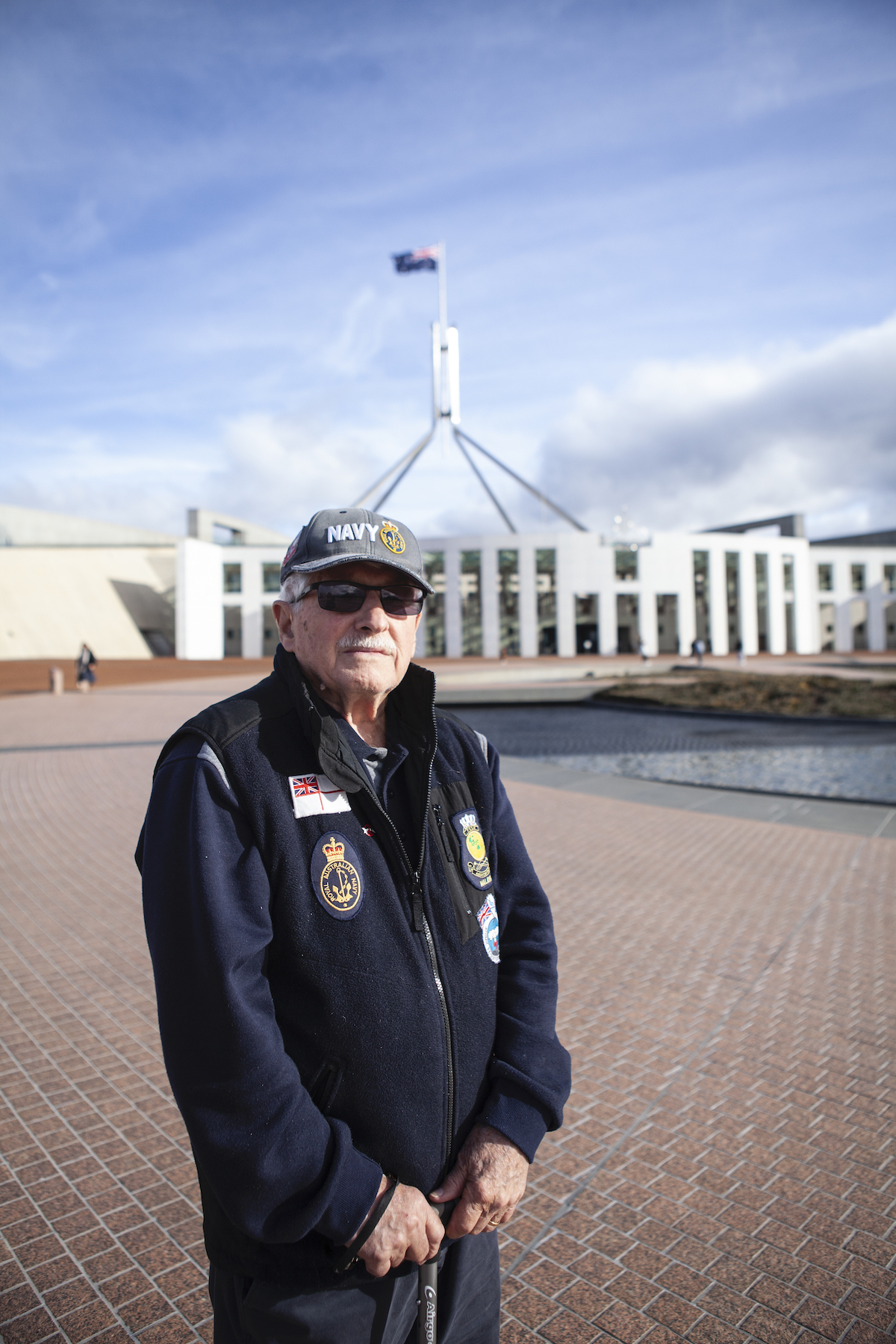
      In 1956, Doug Brooks stationed at the Monte Bello Islands at 18 as a serving member of the Royal Australian Navy. He was aboard HMS Alert on the 19th of June when, as part of Operation Mosaic, a 98 kiloton atomic bomb was detonated just ten miles away. He and the rest of the crew were exposed to the full blast of the explosion.

      “Immediately following the issue to fire the bomb, I experienced an enormous flash of intense burning bright light. I could see the bones of my hands as I covered my eyes—as if they were being x-rayed. A great sheet of heat burnt the backs of our necks. The bang from the detonation was that loud my eardrums felt like they had been perforated. Followed  by a shockwave that travelled across the sea shaking the ship causing me to lose my footing on the deck… Fear about the ramifications of this insane event commenced to haunt me and an intense hatred of the service began to manifest itself. I was diagnosed with PTSD in 1991, and the same year I was told that I had an untreatable bone disease.” 


      Maxine Goodwin, Sydney NSW

      Maxine is the daughter of an Australian nuclear veteran, who became ill as a result of his involvement in the first atomic test in Western Australia. Maxine’s goal is to uncover what her father experienced, learn how the nuclear tests have affected, and will continue to affect, veteran’s descendants.

      “Specialising in Dakota aircraft, my father serviced planes that were contaminated while patrolling the west Australian coast. He was also onboard one of the planes that was directed to fly through the radioactive cloud… My father became ill when I was a child and passed away at the age of forty-nine from lymphoma. My mother, a widow at forty-four, applied to the Australian government for compensation, but her claim was denied.”

      PARLIAMENTARY MEETINGS AND EVENTS

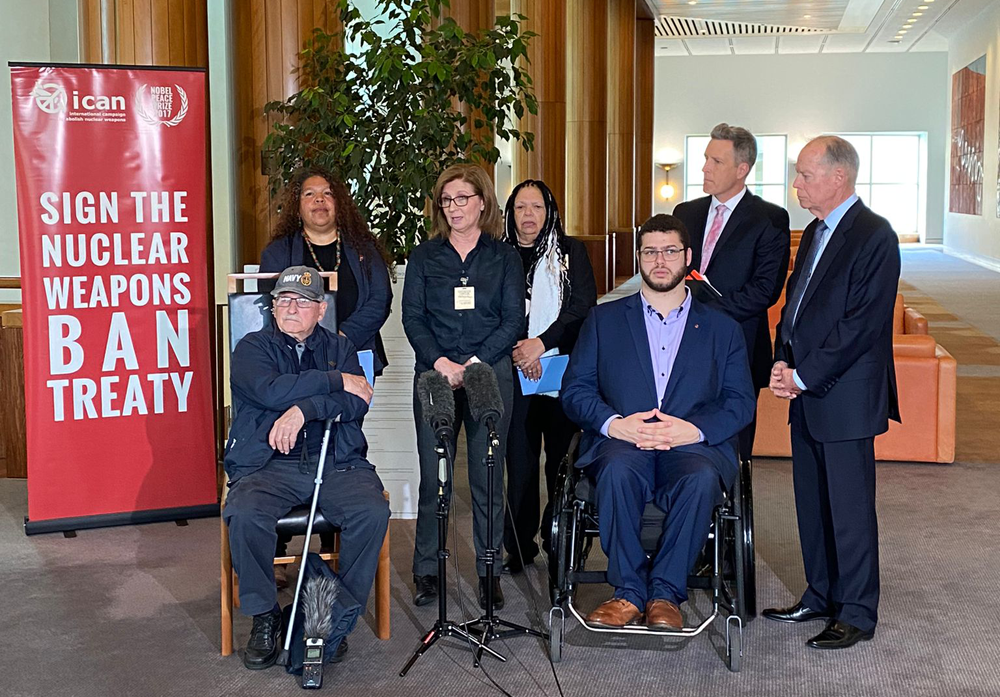
      Parliamentary Friends of the Treaty on the Prohibition of Nuclear Weapons, co-chaired by Josh Wilson MP (Labor), Senator Jordon Steele-John (Greens) and Russell Broadbent MP (Liberal) hosted a press conference and event with the delegates, releasing this statement acknowledging their “bravery, fortitude, and advocacy” and affirming that “Australia’s timely signature and ratification of the Treaty would be a meaningful contribution to strengthening the nuclear non-proliferation and disarmament regime at a time when that is urgently needed.”

      Josh Wilson MP and Senator Jordon Steele-John both delivered powerful speeches in Parliament, respectively available here and here.

      Meetings:

      • Senator Penny Wong, Minister for Foreign Affairs, Leader of the Government in the Senate, Senator for South Australia
      • Tim Gartrell, Chief of Staff to the Prime Minister & Kathy Klugman, International Advisor to the Prime Minister
      • Hon Tanya Plibersek MP, Minister for Environment and Water, Labor MP for Sydney, NSW
      • Matt Thistlethwaite MP, Assistant Minister for Defence, Assistant Minister for Veterans’ Affairs, Labor Member for Kingsford Smith NSW & Chris Ketter (Advisor), Advisor to Richard Marles MP VIC, Defence Minister, Deputy Prime Minister.
      • Peter Wellings (Advisor) Office of Senator Malarndirri McCarthy, Assistant Minister for Indigenous Australians, Assistant Minister for Indigenous Health, Labor Senator for the NT
      • Josh Wilson MP, Labor Member for Fremantle WA, Co-Chair of Parliamentary Friends of TPNW & Susan Templeman MP, Labor Member for Macquarie NSW, led the Australian Delegation at 1MSP of TPNW
      • Ged Kearney MP, Assistant Minister for Health and Aged Care, Labor Member for Cooper VIC & Graham Perrett MP, Labor Member for Moreton QLD.
      • Greens briefing with five Senators: Senator Jordon Steele-John, WA, Spokesperson on Health, Foreign Affairs, Peace, Nuclear Disarmament and Disability Rights, Co-Chair of Parliamentary Friends of TPNW, Senator David Shoebridge, NSW, Spokesperson for Justice, Defence and Veterans’ Affairs, Senator Dorinda Cox, WA Greens Spokesperson for First Nations Issues, Senator Janet Rice, VIC and Senator Barbara Pocock, SA.
      • Russell Broadbent MP, Liberal MP for Monash VIC, Co-Chair of Parliamentary Friends of TPNW.
      • Senator Kerryanne Liddle, Liberal Senator for SA, Member of the Joint Standing Committee on Aboriginal and Torres Strait Islander Affairs.

      MEDIA

      IMAGES

      Images credit: Jesse Boylan.

      BACK TO NEWS

      Parliamentary Statement on Atomic Survivors’ Delegation

      CAMPAIGN NEWS:

      Parliamentary Statement on Atomic Survivors’ Delegation

      Statement by the Parliamentary Friends of the Treaty on the Prohibition of Nuclear Weapons on the visit of British nuclear test survivors and their families to the Australian Parliament

      Josh Wilson MP – Member for Fremantle | Senator Steele-John – Senator for Western Australia | Russell Broadbent MP – Member for Monash

      Canberra, 14 June 2023

      On 15 October 2023 we will mark the 70th anniversary of the first mainland British nuclear test in Australia, at Emu Field in South Australia, on the country of the Pitjantjatjara and Yankunytjatjara peoples.

      This week, parliamentarians have the opportunity to hear from Yankunytjatjara, Antikarinya, and Pitjantjatjara woman and nuclear test survivor, June Lennon, who was four months old, in October 1953, when the Totem 1 nuclear bomb was detonated at Emu Field.

      We should never forget that Ms Lennon’s family and First Nations people were treated abysmally in this matter – given no proper warning or protection, let alone consultation and prior informed consent in relation to the profoundly harmful and toxic use of their country. There is no disputing the fact that the British and Australian governments were utterly carless in their consideration of Aboriginal people.

      Through these secret nuclear weapons test, which were not sanctioned by an Australian cabinet or parliamentary process, Aboriginal people experienced dispossession and displacement, and their sacred lands were irrevocably poisoned.  The truth about the tests and their impact was covered up, and the severe injustice went unrecognised and unaddressed for decades. Indeed, it is not well understood or acknowledged in Australia today.

      As co-chairs, we acknowledge the bravery, fortitude, and advocacy of the Australian Atomic Survivors Delegation that is visiting the Parliament and for their continuing work to raise awareness of those Australians who have had their lives blighted and shortened due to exposure to radiation as part of British nuclear testing. The delegation members include:

      • Douglas Brooks: A Royal Australian Navy nuclear veteran who was exposed to the full blast of the explosion aboard HMS Alert at the first atomic explosion in Australia in the Monte Bello Islands.
      • Maxine Goodwin: The daughter of a nuclear veteran who flew through the Operation Mosaic mushroom cloud in 1952, who later died at 49 of cancer. 
      • Karina Lester: Yankunytjatjara Anangu woman and second-generation nuclear test survivor who participated in the negotiating conference for the UN Treaty on the Prohibition of Nuclear Weapons in 2017.
      • June Lennon: Yankunytjatjara, Antikarinya and Pitjantjatjara woman and nuclear test survivor who was four months old, in October 1953, when the Totem 1 nuclear bomb was detonated at Emu Field, South Australia.

      Their stories are an important reminder of the extraordinary threat that nuclear weapons present to human life and to the health of our planet. We know that in recent years the risk of nuclear conflict has increased, and some nations have indicated a preparedness to consider the resumption of nuclear weapon testing.

      As we approach, on 7 July, the six-year anniversary of the UN’s adoption of the Treaty on the Prohibition of Nuclear Weapons (TPNW), we can celebrate the fact that there are now 92 countries who are signatories to the treaty, and 68 countries who are state parties.  

      As co-chairs of the Parliamentary Friends of the TPNW, we have no doubt that Australia’s timely signature and ratification of the Treaty would be a meaningful contribution to strengthening the nuclear non-proliferation and disarmament regime at a time when that is urgently needed.

      This would be in keeping with Australia’s history of making such contributions, and it would be appropriate for a nation that has directly suffered the harm of nuclear weapons to human health and our environment through poor governance, misguided subordination to the interests of another country, and shameful disregard for the rights and wellbeing of Indigenous Australians.


      Co-Chairs of Parliamentary Friends of the TPNW with the delegates and ICAN. Credit: Jesse Boylan.

      Maxine Goodwin, June Lennon, Douglas Brooks and Karina Lester. Credit: Jesse Boylan.

      BACK TO NEWS